
Recruiters spend a lot of time verifying candidate information, finding updated contact details, checking address history, and researching public information tied to applicants. Traditional sourcing methods still matter, but people search websites help fill gaps that resumes and LinkedIn profiles often leave behind.
A recruiter may receive an outdated phone number, incomplete work history, or inconsistent location details. In those situations, people finder websites can help confirm basic information before moving candidates further into the hiring process.
These tools are also useful for reconnecting with passive candidates, validating contact information, reviewing public records, and identifying potential hiring risks that deserve additional verification through official background checks.
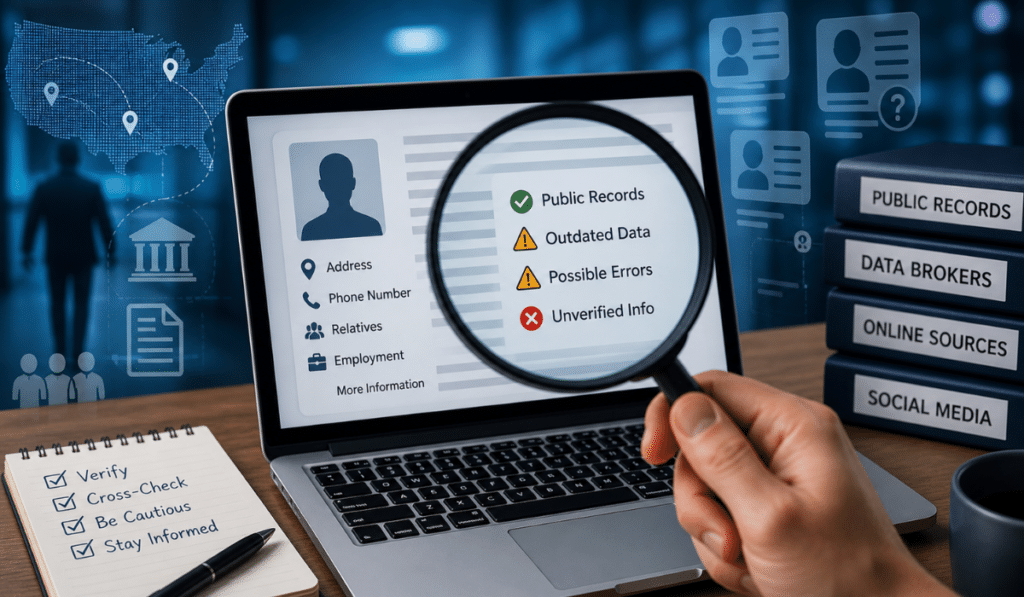
Still, recruiters need to use these platforms carefully. Public records databases are not always accurate or current. Information may be outdated, incomplete, or linked to the wrong person. None of these tools should replace compliant employment screening processes.
Below are ten of the best people search websites for recruiters and hiring teams.
Quick Comparison Table
| Website | Main Use Case | Free or Paid | Best For | Reverse Phone Lookup | Public Records Access |
|---|---|---|---|---|---|
| FamilyTreeNow | Free public records lookup | Mostly Free | Basic candidate research | Yes | Yes |
| TruthFinder | Deep background reports | Paid | Extended candidate research | Yes | Yes |
| BeenVerified | Contact and social profile discovery | Paid | Recruiter contact searches | Yes | Yes |
| Spokeo | Contact aggregation | Paid | Finding updated candidate info | Yes | Yes |
| FastPeopleSearch | Fast free lookups | Free | Quick searches | Yes | Limited |
| Whitepages | Identity verification | Free + Paid | Address and phone validation | Yes | Yes |
| PeopleFinders | Public records research | Paid | Staffing agencies | Yes | Yes |
| Instant Checkmate | Detailed records lookup | Paid | Broader public data searches | Yes | Yes |
| Intelius | Background data reports | Paid | Candidate verification | Yes | Yes |
| ZabaSearch | Basic people lookup | Free | Simple searches | Limited | Limited |
1. FamilyTreeNow
Overview
FamilyTreeNow started as a genealogy-focused platform, but recruiters and researchers now use it for public information lookups, address history checks, and family-related records.
One reason recruiters like it is the free access model. You can search names, approximate age ranges, known relatives, and previous addresses without immediately hitting a paywall.
That makes it useful for early-stage candidate verification.
Main Features
- Name-based people searches
- Address history lookup
- Relative associations
- Age range estimates
- Public records aggregation
- Reverse address lookup
- Possible phone number matching
Best Recruiter Use Cases
Recruiters often use FamilyTreeNow when:
- A candidate’s resume has inconsistent location history
- Contact details appear outdated
- A staffing agency needs fast public verification
- Recruiters are sourcing hard-to-reach passive candidates
- Address history needs a quick cross-check
It’s especially useful for recruiters handling high-volume sourcing.
Pros
- Large amount of free data
- No account required for basic searches
- Fast search speed
- Good for address history research
- Useful for genealogy-related verification
Cons
- Information may be outdated
- Some profiles contain incomplete records
- User interface feels dated
- Limited advanced filtering
- Not designed specifically for employment screening
Pricing Overview
Most searches are free. Some linked services may redirect users to paid data providers.
Public Records Coverage
FamilyTreeNow pulls from:
- Property records
- Census-related information
- Address history databases
- Public contact records
- Family association records
Coverage varies by state.
Reverse Phone Lookup Availability
Basic reverse lookup support exists, although coverage is inconsistent.
Mobile Usability
The website works on mobile browsers, though desktop use is smoother for recruiters reviewing multiple records.
Data Accuracy Discussion
Like most public records search websites, FamilyTreeNow can contain old addresses, disconnected numbers, or duplicate profiles. Recruiters should independently confirm critical information.
Legal and Ethical Considerations
Recruiters should avoid making hiring decisions based solely on FamilyTreeNow data. The platform is not a replacement for FCRA-compliant employment background checks.
2. TruthFinder
Overview
TruthFinder focuses heavily on deep background-style reporting. Recruiters sometimes use it when basic people finder websites do not provide enough detail.
The reports can include:
- Contact data
- Address history
- Social profiles
- Possible relatives
- Public records
- Court-related records
TruthFinder is more research-focused than quick-search focused.
Main Features
Deep Search Reports
TruthFinder attempts to compile detailed public information into a single profile.
Reverse Phone Lookup
Recruiters can identify unknown phone numbers tied to applicants or inbound contacts.
Dark Web Monitoring
This feature is more consumer-oriented, though some users still find it useful.
Best Recruiter Use Cases
TruthFinder works best when recruiters need:
- Broader candidate verification
- Public records research
- Extended address history
- Additional identity validation
- Public social profile discovery
Pros
- Detailed reports
- Strong search depth
- Reverse phone lookup support
- Good record aggregation
- Simple report layout
Cons
- Subscription required
- Reports can take time to generate
- Occasional duplicate entries
- Data may include inaccuracies
- Some information overlaps across reports
Pricing Overview
TruthFinder operates on a monthly subscription model.
Pricing changes frequently, but users generally pay for ongoing report access rather than single searches.
Public Records Coverage
Coverage may include:
- Court records
- Address records
- Social media associations
- Contact information
- Property data
- Public databases
Reverse Phone Lookup Availability
Yes. This is one of TruthFinder’s stronger features.
Mobile Usability
The mobile app is cleaner than many competing people search platforms.
Data Accuracy Discussion
TruthFinder compiles information from multiple databases. That sometimes creates mismatched records or outdated results.
Recruiters should treat reports as research references, not verified hiring documentation.
Legal and Ethical Considerations
TruthFinder states that its services are not intended for FCRA-regulated employment decisions. Recruiters should understand those limitations before using the platform during hiring.
3. BeenVerified
Overview
BeenVerified is widely used for contact discovery and public information research. The platform combines people search tools with social account discovery and phone lookup features.
For recruiters, BeenVerified is useful during sourcing and outreach stages.
Main Features
- Reverse phone lookup
- Email lookup
- Address history
- Username search
- Public records search
- Social media discovery
Recruiter Use Cases
Recruiters use BeenVerified to:
- Find updated contact details
- Verify candidate locations
- Match usernames across platforms
- Reconnect with passive candidates
- Research public online presence
Pros
- User-friendly interface
- Good mobile experience
- Multiple search methods
- Helpful contact discovery tools
- Fast report generation
Cons
- Paid access required
- Some reports lack depth
- Data refresh timing varies
- Phone data can be inconsistent
Pricing Overview
BeenVerified uses recurring subscriptions with unlimited search access during the billing cycle.
Public Records Coverage
The platform may include:
- Criminal-related public records
- Property records
- Address history
- Contact databases
- Social media references
Reverse Phone Lookup Availability
Yes. This is one of the platform’s primary features.
Mobile Usability
The mobile app performs well and is convenient for recruiters working remotely.
Data Accuracy Discussion
BeenVerified works best for contact research and broad public data collection. It should not be treated as an official verification source.
Legal and Ethical Considerations
Recruiters should avoid relying on social profile assumptions or unverified public data when evaluating applicants.
4. Spokeo
Overview
Spokeo specializes in combining public records with online profile information.
The platform is particularly strong at aggregating scattered contact details.
Main Features
- Reverse phone lookup
- Email search
- Address lookup tools
- Social profile matching
- Family associations
- Public records research
Best Recruiter Use Cases
Spokeo is helpful when:
- Recruiters need updated contact details
- Candidate emails bounce
- Phone numbers are disconnected
- Passive sourcing requires extra research
Pros
- Strong contact aggregation
- Fast search results
- Good filtering system
- Useful for sourcing teams
Cons
- Some reports are shallow
- Information can overlap
- Paid subscription needed
- Data freshness varies
Pricing Overview
Spokeo offers monthly subscriptions and limited one-time report options.
Public Records Coverage
Includes:
- Address history
- Contact databases
- Property records
- Social profile references
- Public information databases
Reverse Phone Lookup Availability
Yes. Reverse lookup is one of Spokeo’s better-known tools.
Mobile Usability
Mobile browsing works smoothly, though advanced searches are easier on desktop.
Data Accuracy Discussion
Spokeo’s contact information is often useful for sourcing, but recruiters should expect occasional inaccuracies and outdated entries.
Legal and Ethical Considerations
Recruiters should avoid using inferred social information to judge applicants outside lawful hiring criteria.
5. FastPeopleSearch
Overview
FastPeopleSearch is one of the more popular free people finder websites in the United States.
The platform focuses on speed and simplicity rather than deep reporting.
Main Features
- Free people search
- Phone lookup
- Address lookup
- Basic public information
- Relative matching
Best Recruiter Use Cases
FastPeopleSearch works well for:
- Quick contact validation
- Basic sourcing research
- Fast address checks
- Initial candidate lookups
Pros
- Free access
- Very fast searches
- No login required
- Good for quick verification
Cons
- Limited record depth
- Basic interface
- More outdated data than paid tools
- Minimal advanced filtering
Pricing Overview
Most searches are free.
Public Records Coverage
The platform includes limited public records and contact aggregation data.
Reverse Phone Lookup Availability
Yes.
Mobile Usability
The site works reasonably well on mobile devices.
Data Accuracy Discussion
FastPeopleSearch is useful for quick checks, though recruiters should expect outdated records and occasional mismatched profiles.
Legal and Ethical Considerations
Recruiters should never treat free people search tools as official employment screening systems.
6. Whitepages
Overview
Whitepages has been around for decades and remains one of the most recognizable online people search websites.
It combines directory-style searches with premium identity verification tools.
Main Features
- Reverse phone lookup
- Address lookup
- Identity verification
- Fraud screening indicators
- Contact discovery
Best Recruiter Use Cases
Whitepages helps recruiters with:
- Phone number validation
- Address verification
- Candidate contact research
- Fraud prevention checks
Pros
- Well-known platform
- Strong phone lookup tools
- Clean interface
- Good identity-focused features
Cons
- Premium features require payment
- Some records are limited
- Accuracy depends on source databases
Pricing Overview
Whitepages offers free basic searches and paid premium reports.
Public Records Coverage
Coverage may include:
- Address records
- Phone records
- Property data
- Public contact databases
Reverse Phone Lookup Availability
Yes. This is one of Whitepages’ strongest areas.
Mobile Usability
The platform is mobile-friendly and easy to navigate.
Data Accuracy Discussion
Whitepages performs well for contact verification, though historical data sometimes lags behind recent changes.
Legal and Ethical Considerations
Recruiters should not confuse Whitepages reports with compliant employment background checks.
7. PeopleFinders
Overview
PeopleFinders focuses heavily on public records research and background-style reporting.
It is commonly used by staffing firms and independent recruiters.
Main Features
- Public records lookup
- Reverse phone lookup
- Address history
- Email search
- Background-style reports
Best Recruiter Use Cases
PeopleFinders works well for:
- Candidate verification
- Contact discovery
- Staffing agency sourcing
- Historical address research
Pros
- Large public records database
- Multiple search options
- Reasonably detailed reports
- Useful for agency recruiters
Cons
- Subscription costs add up
- Data inconsistencies appear occasionally
- Interface feels dated
Pricing Overview
PeopleFinders uses report purchases and subscription plans.
Public Records Coverage
Includes:
- Court-related records
- Property records
- Address history
- Contact databases
- Public records aggregation
Reverse Phone Lookup Availability
Yes.
Mobile Usability
Mobile browsing is functional, though desktop use is more efficient.
Data Accuracy Discussion
PeopleFinders can surface valuable public information, but records should still be independently verified.
Legal and Ethical Considerations
Recruiters should follow company hiring policies and local employment laws when researching candidates.
8. Instant Checkmate
Overview
Instant Checkmate offers broad public records searches with detailed report layouts.
The platform is often marketed toward consumer background searches, though recruiters sometimes use it for preliminary research.
Main Features
- Public records search
- Reverse phone lookup
- Address history
- Incarceration-related records
- Social profile references
Best Recruiter Use Cases
Instant Checkmate may help recruiters with:
- Extended public records research
- Candidate identity verification
- Public information checks
- Fraud prevention reviews
Pros
- Detailed reports
- Broad database coverage
- Good search flexibility
- Reverse lookup support
Cons
- Monthly subscription required
- Reports may contain outdated data
- Some searches take time
Pricing Overview
Subscription pricing varies depending on report access levels.
Public Records Coverage
The platform may include:
- Court-related records
- Property records
- Address history
- Phone databases
- Public information aggregation
Reverse Phone Lookup Availability
Yes.
Mobile Usability
The mobile app is usable, though large reports are easier to review on desktop.
Data Accuracy Discussion
Public records databases can contain errors. Recruiters should confirm all important information through compliant screening channels.
Legal and Ethical Considerations
Instant Checkmate is not marketed as an FCRA-compliant employment screening service.
9. Intelius
Overview
Intelius has long been part of the online people search market.
The platform combines people lookup tools with contact discovery and historical records.
Main Features
- People search
- Reverse phone lookup
- Address history
- Public records research
- Email lookup
Best Recruiter Use Cases
Intelius is useful for:
- Candidate identity research
- Contact validation
- Address history checks
- Public information review
Pros
- Established platform
- Good report structure
- Multiple lookup methods
- Decent search depth
Cons
- Subscription-based access
- Data quality varies
- Some records duplicate information
Pricing Overview
Intelius uses monthly subscription pricing and occasional trial offers.
Public Records Coverage
Includes:
- Address databases
- Contact records
- Property information
- Public record aggregation
Reverse Phone Lookup Availability
Yes.
Mobile Usability
The mobile experience is solid for standard searches.
Data Accuracy Discussion
Like other recruiter people search tools, Intelius may contain outdated contact details or incomplete records.
Legal and Ethical Considerations
Recruiters should use Intelius only as a supplementary research source.
10. ZabaSearch
Overview
ZabaSearch focuses on simple public information searches.
It is one of the lighter tools on this list and works best for quick lookups rather than deep reports.
Main Features
- Basic people search
- Address lookup
- Limited phone lookup
- Public information indexing
Best Recruiter Use Cases
ZabaSearch works for:
- Quick contact checks
- Initial candidate searches
- Basic address research
Pros
- Free access
- Fast search process
- Simple interface
Cons
- Limited records depth
- Minimal advanced features
- Outdated entries appear frequently
Pricing Overview
Basic searches are free.
Public Records Coverage
Coverage is narrower than most paid competitors.
Reverse Phone Lookup Availability
Limited support.
Mobile Usability
The website is lightweight and mobile accessible.
Data Accuracy Discussion
Recruiters should expect incomplete or outdated information on many profiles.
Legal and Ethical Considerations
ZabaSearch should only be used for preliminary public information research.
How Recruiters Use People Search Websites
Recruiters use these platforms in several practical ways.
Candidate Verification
A resume may show one city while LinkedIn shows another. Public records databases sometimes help verify whether a candidate recently moved or updated contact information.
That does not prove employment history, but it can identify inconsistencies worth clarifying.
Contact Discovery
One of the biggest recruiter use cases is finding updated phone numbers or email addresses for passive candidates.
This is especially common in:
- Executive recruiting
- Technical recruiting
- Healthcare staffing
- Sales hiring
Resume Cross-Checking
Recruiters occasionally compare public records data against:
- Resume details
- LinkedIn profiles
- Application forms
- Public social accounts
This helps identify missing or inconsistent information.
Address History Validation
Address lookup tools may help confirm:
- Geographic relocation
- Residency patterns
- Recent moves
That matters for remote hiring and location-based recruiting.
Social Profile Discovery
Some recruiter people search tools connect usernames, email addresses, and social profiles.
Recruiters should approach this carefully and avoid making subjective judgments unrelated to job qualifications.
Reconnecting With Passive Candidates
Old applicant databases often contain outdated phone numbers.
People finder websites sometimes help recruiters reconnect with candidates who changed jobs or relocated.
Fraud Prevention During Hiring
Occasionally, recruiters use public information lookup tools to identify suspicious applications involving:
- Fake identities
- Mismatched addresses
- Disposable phone numbers
- False contact details
Still, official verification should always happen through compliant hiring processes.
Legal Considerations for Recruiters
Recruiters need to understand the legal limitations of people search websites.
FCRA Limitations
Most people search platforms are not designed to comply with the Fair Credit Reporting Act (FCRA) for employment decisions.
That means recruiters should not use these sites as official employment background checks.
Public Records Websites vs Official Background Checks
There is a major difference between:
- Public information search websites
- Employment screening providers
Official background check companies follow legal procedures tied to:
- Candidate consent
- Dispute rights
- Reporting standards
- Adverse action rules
People search websites usually do not.
Avoid Hiring Decisions Based Solely on These Tools
Recruiters should never reject applicants solely because of information found on a people search website.
Public databases can contain:
- Incorrect records
- Old addresses
- Shared names
- Misidentified relatives
- Incomplete court information
Independent verification matters.
Privacy Considerations
Recruiters should respect privacy boundaries during candidate research.
Good practices include:
- Limiting searches to job-relevant research
- Avoiding invasive personal assumptions
- Following company compliance policies
- Documenting screening procedures consistently
Ethical Research Practices
Ethical recruiter research means:
- Treating all candidates equally
- Applying consistent standards
- Avoiding bias
- Separating verified facts from assumptions
Free vs Paid People Search Tools
Free and paid platforms serve different purposes.
| Feature | Free Tools | Paid Tools |
|---|---|---|
| Data Depth | Limited | Broader reports |
| Accuracy | More inconsistent | Usually better, still imperfect |
| Update Frequency | Slower | More frequent |
| Ads | Common | Less intrusive |
| Search Speed | Fast | Moderate to fast |
| Export Features | Rare | Often included |
| Contact Discovery | Basic | Stronger |
| Historical Data | Limited | More detailed |
When Free Tools Work Well
Free people finder websites are useful for:
- Quick contact checks
- Basic address validation
- Early sourcing research
- Simple people lookups
When Paid Tools Make Sense
Paid platforms work better when recruiters need:
- Broader public records
- Multiple search methods
- Higher search volume
- More detailed reports
- Staffing agency workflows
Even paid tools still contain errors occasionally.
Best Website by Use Case
Best Free Option
FastPeopleSearch is one of the strongest free options for quick searches.
Best for Deep Background Data
TruthFinder provides some of the deeper report structures among consumer people search platforms.
Best for Contact Lookup
Spokeo performs well for updated contact discovery.
Best for Staffing Agencies
PeopleFinders fits staffing workflows reasonably well because of its broad public records coverage.
Best for Quick Searches
FamilyTreeNow works well for quick public information research without immediate subscription barriers.
Best for Reverse Phone Lookup
Whitepages remains one of the better-known reverse phone lookup platforms.
Final Verdict
The best people search websites for recruiters depend on how the tools are being used.
Recruiters focused on quick sourcing research may prefer free platforms like FamilyTreeNow or FastPeopleSearch.
Staffing agencies handling larger candidate volumes often benefit from broader databases offered by PeopleFinders, TruthFinder, or Intelius.
For contact discovery and passive candidate outreach, Spokeo and BeenVerified are useful options.
None of these tools should replace compliant employment background screening. Public records databases can contain outdated or inaccurate information, and recruiters should independently verify important details before making hiring decisions.
Used carefully, these platforms can help recruiters validate information, reconnect with candidates, and improve sourcing efficiency without relying entirely on traditional databases.
FAQs
1. Are people search websites legal for recruiters to use?
Yes, recruiters can use public information lookup websites for research purposes. However, they should not use non-FCRA-compliant sites as official employment background checks.
2. What is the best free people search website for recruiters?
FamilyTreeNow and FastPeopleSearch are popular free options for quick contact research and address lookups.
3. Can recruiters use reverse phone lookup tools?
Yes. Many recruiters use reverse phone lookup for recruiters to identify outdated or unknown contact numbers tied to candidates.
4. Are people search websites accurate?
Accuracy varies. Public records databases may contain outdated or incomplete information, so recruiters should independently verify important details.
5. What’s the difference between a people search website and a background check company?
People search websites aggregate public information. Official background check companies follow FCRA compliance standards required for employment screening.

I am Sandy Saga, the writer and content researcher behind FamilyTreeNow.net. I create clear, easy-to-understand informational content related to family history, people search resources, genealogy topics, and public information awareness. My goal is to help readers understand how online search tools and family research resources work in a simple and responsible way.
The content on FamilyTreeNow.net is published strictly for informational and educational purposes only. I focus on providing accurate, transparent, and reader-friendly information to help users explore and learn. This website does not offer official records, legal advice, or professional services — it exists solely as an independent informational resource.