Delaware’s long and layered history makes it one of the most fascinating states for family history research in the United States. Although it is the second-smallest state by land area, Delaware played an important role in colonial settlement, immigration, agriculture, industry, and early American government.
Located on a peninsula bordered by the Chesapeake Bay and Delaware Bay, Delaware became a meeting point for cultures from Europe, Africa, and later across the world. These migration patterns created generations of records that continue to help descendants uncover family stories today.
Whether your ancestors were Swedish settlers, Dutch traders, English colonists, free African-American families, Irish immigrants, or industrial workers in Wilmington, Delaware genealogy records offer valuable clues for building your family tree.
This guide explores Delaware’s historical background and explains where and how to research Delaware family history.
Understanding Delaware’s Historical Roots
Genealogy becomes easier when researchers understand the historical periods that influenced record creation.
Early Exploration and Settlement
European exploration reached Delaware in 1609 when English navigator Henry Hudson explored the nearby region.
The Dutch attempted one of the first settlements in 1631. Although early efforts failed, later waves of settlers returned and helped establish permanent communities.
In 1638, Sweden created the colony of New Sweden.
This settlement introduced:
- Swedish families
- Finnish immigrants
- Agricultural communities
- Religious settlements
These early arrivals produced some of the earliest Delaware family records.
Dutch and New Netherland Period
By 1655, Dutch control returned.
The Dutch expanded:
- Trade routes
- Agricultural settlements
- Colonial administration
- Enslaved labor systems
Researchers tracing Dutch-era families may discover records under Dutch spellings and naming conventions.
English Rule and Pennsylvania Administration
The English gained authority over Delaware during the late seventeenth century.
In 1682, William Penn integrated Delaware into Pennsylvania’s administration.
As a result, some early Delaware records appear in Pennsylvania archives rather than Delaware repositories.
How Migration Shaped Delaware Genealogy
Delaware experienced multiple migration periods.
Colonial Settlers
Early populations included:
- Dutch
- Swedish
- Finnish
- English
- German Mennonite communities
African-American Heritage
African ancestry became an important part of Delaware history during Dutch settlement.
By the nineteenth century, many formerly enslaved individuals established free communities and left valuable genealogical records.
European Immigration
During the nineteenth century Delaware welcomed:
- Irish Catholics
- German families
- French migrants
- Italians
- Polish communities
- Scandinavian immigrants
- Eastern European settlers
Understanding these migration waves helps researchers locate records across languages and jurisdictions.
Delaware Birth Records
Birth records help establish family connections and timelines.
Information commonly found includes:
- Child’s name
- Birth date
- Birthplace
- Parents’ names
- Residence
Older birth records may not exist for every family.
Alternative sources include:
- Baptism records
- Family Bibles
- Newspaper announcements
- Church registries
Research Tip:
If a birth certificate cannot be located, search church records from nearby communities.
Delaware Marriage Records
Marriage records provide critical evidence for connecting generations.
These records may reveal:
- Bride and groom names
- Ages
- Residence
- Occupation
- Witness names
- Parents’ information
Marriage licenses are especially valuable because relatives frequently acted as witnesses.
Delaware Death Records
Death records often provide unexpected details.
Researchers may discover:
- Birthplace
- Parent names
- Occupation
- Burial location
- Informant details
Obituaries can add personal information not included on certificates.
Delaware Census Records
Census collections remain among the strongest genealogy resources available.
Federal census records may reveal:
- Family structure
- Occupation
- Immigration details
- Literacy
- Property ownership
Compare multiple census decades to identify:
- Family movement
- Children leaving home
- Economic changes
Population schedules can also identify neighboring families that later became relatives.
Land and Probate Records
Land ownership and estate documents often survive longer than civil records.
Useful records include:
Land Records
- Property deeds
- Boundary surveys
- Tax records
- Transfers
Probate Records
- Wills
- Estate inventories
- Guardianship files
- Court distributions
These documents frequently identify spouses and children.
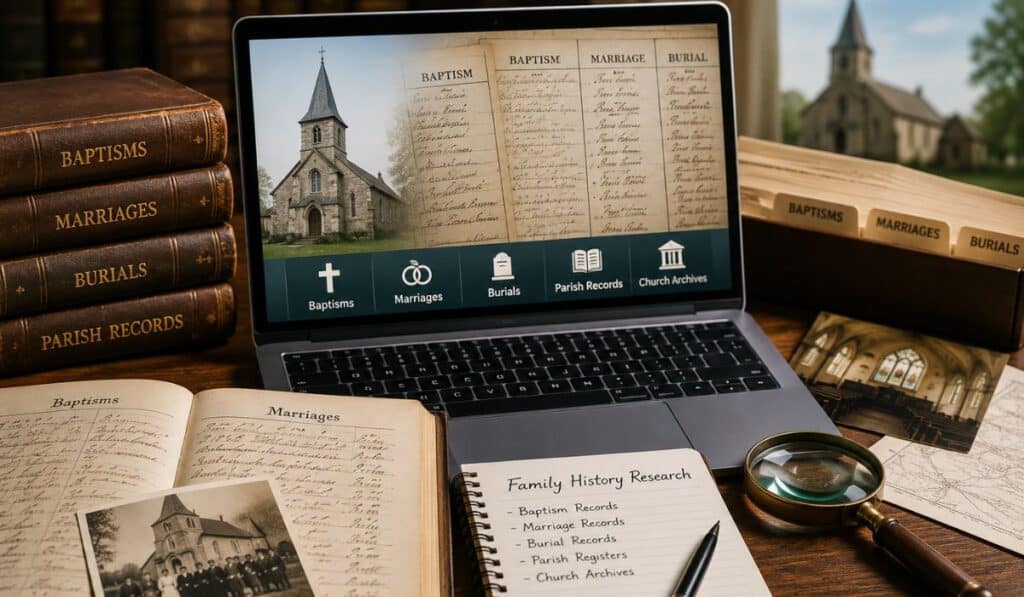
Church and Cemetery Records
Religious records are among Delaware’s most valuable genealogy tools.
Records may include:
- Baptisms
- Confirmations
- Marriages
- Burials
- Membership lists
Delaware’s religious history includes:
- Quaker communities
- Lutheran congregations
- Catholic parishes
- Methodist churches
- Presbyterian churches
Cemetery records can reveal family clusters spanning generations.
Immigration and Naturalization Records
Delaware’s population growth created extensive immigration documentation.
Search for:
- Passenger lists
- Naturalization petitions
- Citizenship records
- Immigration declarations
These records may identify:
- Birth villages
- Arrival dates
- Original surnames
African-American Genealogy Resources in Delaware
African-American research requires combining multiple record types.
Helpful sources include:
- Church records
- Estate inventories
- Census schedules
- Land ownership files
- Community histories
- Freed records
Researchers should document entire households rather than focusing only on direct ancestors.
County-by-County Genealogy Research
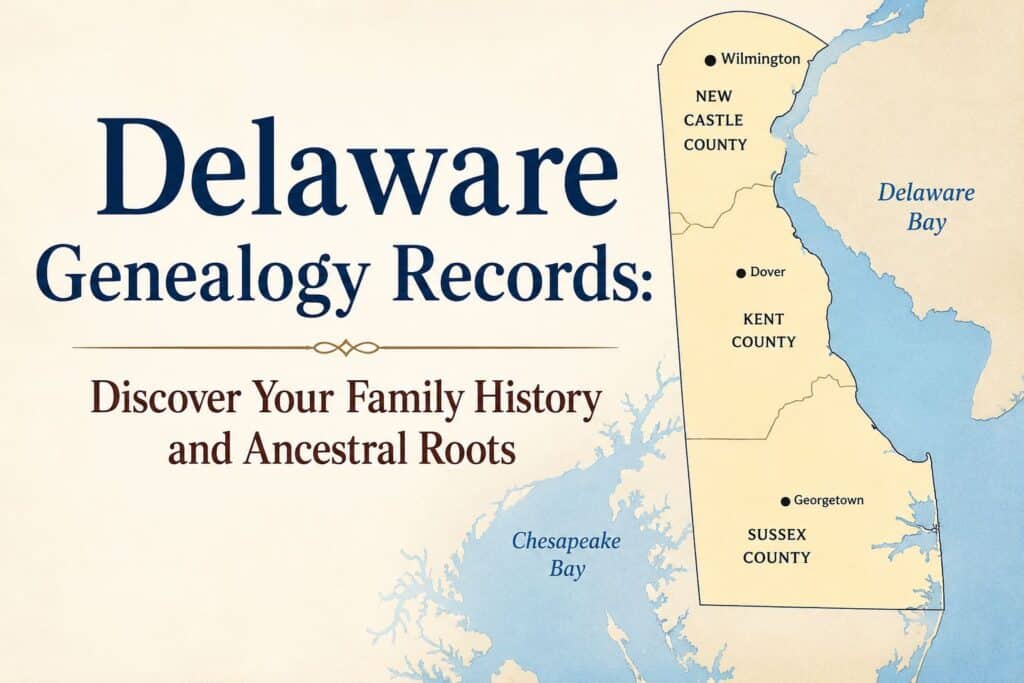
New Castle County
The most populated county and often the starting point for research.
Useful records include:
- Industrial employment
- Urban directories
- Property documents
Kent County
Known for agricultural history.
Search:
- Probate collections
- Marriage records
- Local church archives
Sussex County
Excellent for rural ancestry.
Look for:
- Land transactions
- Family cemeteries
- Agricultural records
County boundaries matter when locating historical records.
Tips for Tracing Immigrant Ancestors in Delaware
Start with Yourself
Document current generations before moving backward.
Search Alternate Spellings
Names frequently changed over time.
Examples:
- Swedish adaptations
- German variations
- English phonetic spellings
Follow Entire Families
Research siblings and neighbors.
Build Timelines
Track each ancestor year by year.
Compare Multiple Sources
Never rely on one document alone.
Common Delaware Genealogy Challenges
Missing Records
Solution:
Use substitute sources including taxes, church files, and newspapers.
Name Changes
Solution:
Search broad variations.
Migration Confusion
Solution:
Research neighboring states.
Lost Family Stories
Solution:
Interview relatives and preserve oral history.
Best Practices for Building Your Delaware Family Tree
Successful genealogy combines evidence, historical understanding, and organization.
To improve results:
- Save document copies
- Record sources
- Create timelines
- Verify relationships
- Revisit old conclusions
Genealogy is an ongoing process rather than a one-time project.
Final Thoughts
Delaware’s history reflects centuries of movement, settlement, and cultural exchange. Dutch colonists, Swedish settlers, English administrators, African-American communities, and generations of immigrants all contributed to the historical record preserved today.
Researching Delaware genealogy records allows families to go beyond names and dates and understand the journeys that shaped later generations.
By combining census records, land documents, church archives, immigration records, and local history, researchers can uncover meaningful connections and create a lasting Delaware family tree for future generations.
Frequently Asked Questions
1. What are Delaware genealogy records?
These are historical documents used to trace ancestors including birth, marriage, death, census, land, church, and probate records.
2. What county should I search first?
Start with the county where your ancestor lived longest.
3. Can I trace colonial Delaware ancestors?
Yes. Colonial records, church collections, and land documents can help.
4. Are church records useful?
Very useful, especially when civil records are unavailable.
5. Why are Pennsylvania records important?
Because Delaware was administered with Pennsylvania during part of its colonial history.

I am Sandy Saga, the writer and content researcher behind FamilyTreeNow.net. I create clear, easy-to-understand informational content related to family history, people search resources, genealogy topics, and public information awareness. My goal is to help readers understand how online search tools and family research resources work in a simple and responsible way.
The content on FamilyTreeNow.net is published strictly for informational and educational purposes only. I focus on providing accurate, transparent, and reader-friendly information to help users explore and learn. This website does not offer official records, legal advice, or professional services — it exists solely as an independent informational resource.