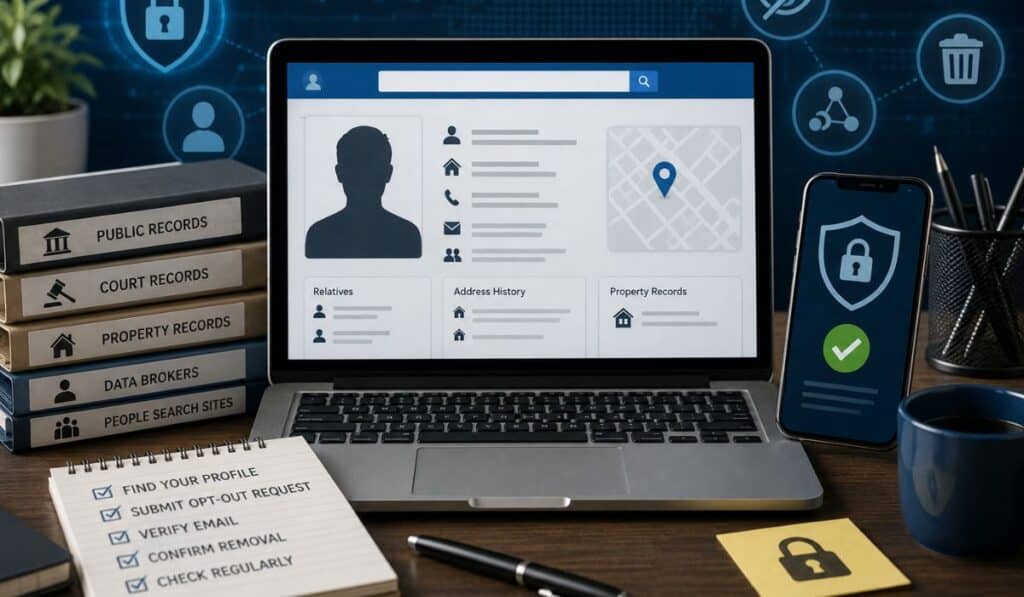

Data scrapers collect information from websites automatically. These tools scan pages, copy data, organize it into databases, and often reuse or resell that information elsewhere. Most people encounter scraping without realizing it. A phone number appears in spam campaigns. An old address shows up on a reverse lookup site. A social profile gets copied into a marketing database.
People search platforms, public record websites, and online directories are common scraping targets because they contain structured personal information that is easy for bots to process. Sites that publish names, relatives, phone numbers, addresses, age ranges, and public records can become large sources for automated data harvesting.
The risks vary depending on how the information gets used. Some scraping supports legitimate indexing or research. Other scraping feeds spam operations, phishing campaigns, identity profiling, robocalls, or aggressive advertising databases. In more serious cases, scraped information contributes to fraud attempts or account takeover targeting.
Many users searching for ways to stop data scraping are really trying to solve a larger problem. They want better online privacy protection. They want fewer unknown callers, less exposure on people search websites, and more control over where their personal information appears online.
Completely disappearing from the internet usually is not realistic. Public records laws, archived databases, and data brokers make full removal difficult. Still, there are practical ways to reduce exposure, remove personal data from websites, and make scraping much harder.
What Are Data Scrapers?
Data scrapers are automated tools that collect information from websites. The process is often called web scraping.
A scraper visits pages the same way a normal browser does. Instead of reading the content visually, the scraper extracts structured information from the page code. It can gather thousands of records quickly.
Scrapers commonly collect:
- Full names
- Phone numbers
- Email addresses
- Home addresses
- Age ranges
- Relatives
- Employment history
- Social media links
- Public records
- Property information
Some scrapers are simple bots. Others are advanced systems that rotate IP addresses, mimic human browsing behavior, and bypass restrictions designed to stop automated crawling.
Not all scraping is illegal. Search engines scrape websites constantly to index pages for search results. Researchers also use scraping tools for analytics and monitoring. Problems usually begin when scraped data violates a platform’s terms, ignores privacy protections, or gets reused in harmful ways.
People search websites are especially attractive because they aggregate data into searchable formats. Instead of collecting information from hundreds of county databases individually, scrapers can pull organized records from a single source.
That efficiency is exactly why privacy-conscious users worry about data scraper protection.
How Data Scrapers Find Personal Information
Most personal data online does not originate from a single source. Scrapers combine information from many places to build detailed profiles.
Public Records
Many government records are legally public in the United States. That includes property ownership data, court filings, voter registrations in some states, marriage records, and business registrations.
Scrapers target these databases because they contain verified information. Even when records are scattered across local agencies, automated tools can gather them into centralized databases.
Social Media Profiles
Public social profiles are major scraping targets.
Bots scan profile pages for:
- Names
- Locations
- Photos
- Employment details
- Friend lists
- Contact information
- Usernames
Even limited public information can become useful when combined with other datasets.
For example, a scraper may connect a LinkedIn profile to a public phone listing and then match both against leaked marketing databases.
People Search Websites
People search websites organize personal information into searchable profiles. These platforms may aggregate public records, directory listings, historical addresses, and related names.
Because the data is already structured, scraping becomes easier.
A scraper might search thousands of names automatically and extract:
- Address history
- Relative associations
- Phone records
- Age estimates
- Known aliases
This is one reason people often search for ways to remove yourself from people search sites.
Online Directories
Business directories, alumni databases, professional listings, and local community sites also get scraped frequently.
A public business listing containing a phone number and email address may eventually appear in unrelated marketing databases.
Court Records
Court systems sometimes publish searchable filings online. Depending on the jurisdiction, records may include:
- Full names
- Addresses
- Civil disputes
- Bankruptcy filings
- Criminal case information
Scrapers collect these records for aggregation and resale.
Property Databases
County assessor websites often contain property ownership information. Real estate databases may expose:
- Owner names
- Purchase history
- Mailing addresses
- Tax records
Scrapers combine this information with other datasets to build broader profiles.
Cached Search Engine Results
Even after a page is removed, cached search results may temporarily preserve old information.
Some scraping systems archive these cached versions before they disappear.
Leaked Databases
Data breaches contribute heavily to personal data exposure online.
Scrapers and data brokers sometimes combine breached records with public information to create more complete profiles.
Data Brokers
Data brokers buy, sell, and exchange consumer information from multiple sources.
Some data brokers collect information directly. Others purchase scraped datasets from third parties.
This creates a cycle where information removed from one source later reappears elsewhere.
How Automated Scraping Systems Work
Most scraping systems follow a predictable process.
First, the bot identifies target pages through search engines, public sitemaps, APIs, or known URL structures.
Next, it crawls the site automatically and downloads page content.
The scraper then extracts specific fields such as names, addresses, or phone numbers.
Finally, the collected information gets stored, analyzed, merged with other datasets, or sold commercially.
Advanced scrapers often rotate IP addresses to avoid detection. Some also bypass rate limits by distributing requests across large proxy networks.
Why People Search Websites Get Scraped
People search websites are valuable scraping targets because they centralize large amounts of public information.
Instead of gathering records individually from government databases, a scraper can pull organized information from one searchable platform.
Several factors make these sites attractive.
High-Volume Public Information
People search databases may contain millions of records. That scale is appealing to automated collection systems.
Aggregated Data
Many platforms combine records from multiple sources into a single profile. A scraper benefits from that aggregation immediately.
Search-Friendly Structures
Structured search results make extraction easier. Consistent layouts help bots identify phone numbers, addresses, and relatives automatically.
Open Indexing
Some people search platforms allow search engines to index profile pages. That visibility makes discovery easier for both users and scrapers.
Public Accessibility
If information is accessible without logging in, scraping becomes much simpler.
API Abuse
Some scrapers exploit poorly protected APIs instead of scraping visible pages directly. APIs often expose structured datasets more efficiently than HTML pages.
Automated Crawling
Bots continuously scan public databases looking for updated records, newly indexed pages, or profile changes.
Platforms that publish public information face a difficult balance. Users may expect searchable access to public records while also wanting strong privacy protections. Many people search services offer opt-out systems to help users reduce exposure, but those removals often require ongoing monitoring.
Signs Your Information Is Being Scraped
Most scraping happens silently. Still, certain patterns may suggest your information has spread through scraping networks or data broker systems.
Sudden Spam Calls
A noticeable increase in robocalls or unknown callers often follows broader exposure of phone numbers online.
For example, a number listed publicly on an old directory site may eventually circulate through scraped marketing databases.
Phishing Emails
Scraped information helps scammers personalize phishing attempts.
An email referencing your hometown, relatives, or employer may indicate data aggregation from public sources.
Fake Account Attempts
Some attackers use scraped personal details to impersonate users or bypass account recovery systems.
Increased Robocalls
Phone numbers harvested from people search websites frequently appear in automated dialing campaigns.
Targeted Scams
Scammers increasingly personalize fraud attempts using publicly available information.
Someone pretending to know your relatives, address history, or property ownership details may have obtained those records through scraping systems.
Copied Profile Information
Finding your bio, photo, or descriptions duplicated across unknown websites can indicate scraping activity.
Unfamiliar Marketing Outreach
Aggressive marketing emails or calls referencing personal details may suggest your information was included in brokered datasets.
How to Block Data Scrapers
Blocking every scraper completely is difficult. The better goal is reducing exposure and making automated collection more expensive or unreliable.
Limit Public Exposure
The less information available publicly, the less scrapers can collect.
Review old profiles, forum accounts, public comments, and directory listings. Remove anything unnecessary.
Even small reductions help. Removing a public birth year or phone number limits how easily datasets can be matched.
The limitation is simple. Public records may still exist elsewhere.
Remove Unnecessary Personal Details
Many users overshare without realizing it.
Avoid publicly listing:
- Personal phone numbers
- Home addresses
- Secondary emails
- Relative names
- Birthdates
Business owners often publish too much contact information on local listings.
A separate business email and virtual phone number can reduce long-term exposure.
Lock Down Social Media Privacy Settings
Social platforms are major scraping targets.
Restrict profile visibility where possible. Limit public access to:
- Friends lists
- Contact information
- Photos
- Employment details
- Location history
Privacy settings reduce exposure but cannot fully prevent scraping if content remains publicly visible.
Use Robots.txt Correctly
Website owners can use a robots.txt file to guide search engine crawlers and legitimate bots.
Example:
User-agent: *
Disallow: /private/
This does not block malicious scrapers directly. It only instructs compliant crawlers.
Bad actors frequently ignore robots.txt rules entirely.
Still, proper configuration helps reduce unnecessary indexing.
Add Rate Limiting
Rate limiting restricts how many requests a user or IP can make within a time period.
This helps stop bots from scraping data aggressively.
For example:
- Limit repeated searches
- Restrict account creation attempts
- Block excessive page requests
The downside is that sophisticated scrapers rotate IP addresses to bypass limits.
Use CAPTCHA Systems
CAPTCHAs force visitors to complete human verification tasks.
These systems help block web scrapers that rely on automation.
Modern CAPTCHA tools analyze behavior patterns rather than only image puzzles.
Still, some advanced bots can bypass basic CAPTCHA systems using automation services or human-solving farms.
Block Suspicious IP Ranges
Web administrators often block IP ranges associated with scraping activity.
Indicators may include:
- Extremely fast requests
- Repeated search patterns
- Automated browsing behavior
IP blocking helps reduce automated crawling but may also affect legitimate users sharing the same networks.
Use Bot Detection Tools
Dedicated bot detection systems analyze visitor behavior in real time.
They identify patterns such as:
- Non-human mouse movement
- Rapid navigation
- Scripted interactions
- Abnormal request frequency
Many enterprise websites rely on layered detection systems instead of single blocking methods.
Monitor Unusual Traffic Patterns
Website operators should review traffic analytics regularly.
Warning signs include:
- Spikes in page requests
- Repeated access to profile pages
- High-volume search queries
- Large numbers of requests from limited IP groups
Monitoring allows faster response before scraping escalates.
Prevent Email Harvesting
Email harvesting bots scan websites for visible addresses.
Avoid posting personal emails publicly when possible.
Alternatives include:
- Contact forms
- Email masking services
- Obfuscated email formatting
Even then, determined scrapers may still extract addresses from page code or JavaScript rendering.
Hide Phone Numbers Where Possible
Public phone numbers spread quickly once indexed.
If possible:
- Use secondary business numbers
- Remove old listings
- Avoid publishing personal mobile numbers publicly
Unfortunately, historical databases may preserve old records for years.
Use Privacy-Focused Domain Registration
Website owners should use domain privacy services when registering domains.
Without privacy protection, WHOIS records may expose:
- Names
- Addresses
- Phone numbers
- Email addresses
Many registrars now include privacy protection automatically.
Remove Information From People Search Websites
Opt-out requests remain one of the most practical privacy steps available.
Removing profiles from major people search websites reduces centralized exposure.
Still, data often reappears later through refreshed databases.
That is why monitoring matters.
Submit Opt-Out Requests
Most major people search platforms provide opt-out procedures.
These usually require:
- Finding your profile
- Verifying identity
- Confirming ownership
- Submitting removal requests
The process can take days or weeks depending on the platform.
Reduce Indexed Pages
Website owners can use:
- noindex tags
- authentication requirements
- restricted search access
to reduce public visibility.
This helps prevent search engines from indexing sensitive pages.
Use Anti-Scraping Services
Some security platforms specialize in preventing data harvesting.
These tools may include:
- behavioral analysis
- fingerprinting
- challenge systems
- traffic filtering
Large websites often combine multiple defenses rather than relying on a single tool.
Enable Account Security Protections
Strong account security reduces damage if personal data becomes exposed.
Important protections include:
- multi-factor authentication
- unique passwords
- login alerts
- recovery monitoring
Even if scraping occurs, hardened accounts remain harder to compromise.
How to Remove Your Data From People Search Websites
Removing personal information from people search websites takes time and persistence.
The first step is searching your name online alongside past cities, phone numbers, or relatives.
You may find multiple profiles across different platforms.
Duplicate listings are common because databases merge records imperfectly.
Review results carefully before submitting removals.
Many platforms require identity verification to prevent fraudulent removal requests. That may involve email confirmation or uploading limited identification documents.
Be cautious during this process. Only use official removal pages.
Some users choose to create a dedicated privacy email address specifically for opt-out requests.
People search privacy management often becomes an ongoing process rather than a one-time cleanup.
For example, a record removed today may reappear months later after a database refresh.
Platforms such as FamilyTreeNow offer opt-out mechanisms that allow users to request removal from searchable records. Similar processes exist across many people search websites and public record aggregators.
Monitoring periodically helps catch reappearances early.
Best Tools to Reduce Data Scraping Risks
No tool eliminates scraping entirely, but several categories help reduce exposure.
Password Managers
Password managers help create unique credentials for every account.
This limits damage if scraped information contributes to credential attacks.
Good password hygiene remains one of the most practical identity protection steps available.
Privacy Browsers
Privacy-focused browsers reduce tracking and limit third-party data collection.
Many include:
- tracker blocking
- fingerprinting protection
- cookie isolation
These features help reduce behavioral profiling.
VPNs
VPNs hide a user’s IP address from websites and networks.
They improve browsing privacy but do not directly stop data scrapers from collecting publicly visible information.
VPNs work best as part of broader online privacy protection practices.
Bot Protection Tools
Website owners can use dedicated anti-bot platforms to detect automated scraping behavior.
These services typically analyze:
- request patterns
- browser fingerprints
- behavioral anomalies
Email Masking Services
Email masking tools create disposable forwarding addresses.
This helps prevent marketers and scrapers from linking activity across websites.
Monitoring Alerts
Some services monitor exposed databases and alert users when personal information appears online.
These alerts help identify new exposure quickly.
Identity Monitoring Services
Identity monitoring platforms track signs of fraud, leaked credentials, and suspicious activity.
These services do not stop scraping directly, but they help users respond faster when exposure leads to abuse.
Common Mistakes People Make
Many privacy problems come from habits that seem harmless initially.
Oversharing on Social Media
Public birthday posts, family details, location tags, and phone numbers all contribute to broader exposure.
Using Public Usernames Everywhere
Reusing the same username across platforms makes profile linking easier.
A scraper can connect social accounts, forums, and public directories quickly.
Ignoring Old Accounts
Old forums, blogs, and community sites often remain indexed long after users stop using them.
These forgotten accounts still expose personal details.
Leaving Public PDFs Indexed
Resumes, reports, and documents uploaded online sometimes contain hidden metadata, phone numbers, or addresses.
Search engines may index those files directly.
Exposing Phone Numbers in Business Listings
Local business pages often become long-term scraping targets.
Using personal numbers for public listings increases spam risk significantly.
Skipping Opt-Out Requests
Many users know their information appears online but never submit removal requests.
While opt-outs are imperfect, they still reduce centralized exposure.
Reusing Email Addresses
Using one email everywhere makes cross-platform tracking easier.
Separate emails for business, shopping, and personal use reduce profiling.
Can You Completely Stop Data Scrapers?
Probably not completely.
Public internet exposure cannot be eliminated fully if information exists in government records, archived databases, leaked datasets, or publicly accessible platforms.
Even when users remove data from one source, copies may persist elsewhere.
That does not mean privacy efforts are pointless.
Reducing exposure still matters because it lowers visibility, limits automated aggregation, and decreases the amount of easily accessible information available to scrapers.
Think of privacy protection as ongoing risk reduction rather than permanent deletion.
Users who regularly:
- monitor search results
- remove unnecessary public information
- submit opt-outs
- secure accounts
- limit oversharing
typically experience fewer privacy problems over time.
Consistency matters more than one-time cleanup efforts.
Conclusion
Learning how to block data scrapers starts with understanding how personal information spreads online. Public records, social media activity, people search websites, and data brokers all contribute to wider exposure.
There is no permanent fix that removes every trace of personal data from the internet. Still, practical steps make a real difference.
Reducing public exposure, securing accounts, removing outdated listings, submitting opt-out requests, and monitoring search results regularly can limit how easily automated systems collect and reuse your information.
Online privacy protection works best as an ongoing habit rather than a one-time task.
Frequently Asked Questions
1. Is web scraping illegal?
Not always. Search engines scrape websites legally for indexing purposes. Problems usually arise when scraping violates terms of service, bypasses restrictions, or misuses personal information.
2. Can data scrapers steal identities?
Scraping alone usually does not equal identity theft. However, scraped personal data can support phishing, fraud attempts, account targeting, or impersonation scams.
3. How do I remove my information from people search sites?
Search your name on major people search websites, locate matching profiles, and follow each platform’s opt-out process.
4. Does robots.txt stop scrapers?
Only compliant bots follow robots.txt instructions. Malicious scrapers often ignore those rules completely.
5. Can VPNs block scraping?
No. VPNs help protect browsing privacy and hide your IP address, but they do not prevent scrapers from collecting publicly visible information.
6. Why is my information on public record websites?
Many records are legally public in the United States. Data brokers and people search websites aggregate those records into searchable databases.
7. How often should I monitor my data online?
Checking every few months is reasonable for most users. High-profile individuals or business owners may want more frequent monitoring.
8. What is the best way to stop data harvesting?
There is no single solution. The best approach combines privacy settings, opt-out requests, reduced public exposure, account security, and ongoing monitoring.
9. Can deleting social media accounts remove scraped data?
Not always. Scrapers may already have archived older content before deletion occurred.
10. Why does my information reappear after removal?
Many databases refresh periodically using updated public records or third-party data feeds.
11. Are people search websites legal?
Many operate legally by publishing information obtained from public records and licensed datasets, though laws vary by jurisdiction.
12. Do anti-scraping tools work?
They help reduce automated collection significantly, especially when combined with rate limiting, CAPTCHA systems, and behavioral analysis.

I am Sandy Saga, the writer and content researcher behind FamilyTreeNow.net. I create clear, easy-to-understand informational content related to family history, people search resources, genealogy topics, and public information awareness. My goal is to help readers understand how online search tools and family research resources work in a simple and responsible way.
The content on FamilyTreeNow.net is published strictly for informational and educational purposes only. I focus on providing accurate, transparent, and reader-friendly information to help users explore and learn. This website does not offer official records, legal advice, or professional services — it exists solely as an independent informational resource.