People search websites have become common tools for finding contact details, checking public records, reconnecting with relatives, and verifying basic information about someone. In the United States, platforms like FastPeopleSearch and FamilyTreeNow are frequently compared because both provide free access to large amounts of public data.
These websites collect information from public records, government databases, property records, phone directories, and third-party data brokers. Users can often search by name, phone number, or address. Depending on the platform, search results may include age, relatives, previous addresses, phone numbers, and sometimes historical records connected to family relationships.
The comparison between FastPeopleSearch and FamilyTreeNow usually comes down to three things: search accuracy, data depth, and privacy concerns.
Some users simply want a reverse phone lookup after receiving repeated spam calls. Others want to reconnect with old classmates or verify an address before meeting someone. Genealogy researchers may look for family relationships and historical household records. At the same time, many people are uncomfortable seeing their personal information appear publicly in Google search results.
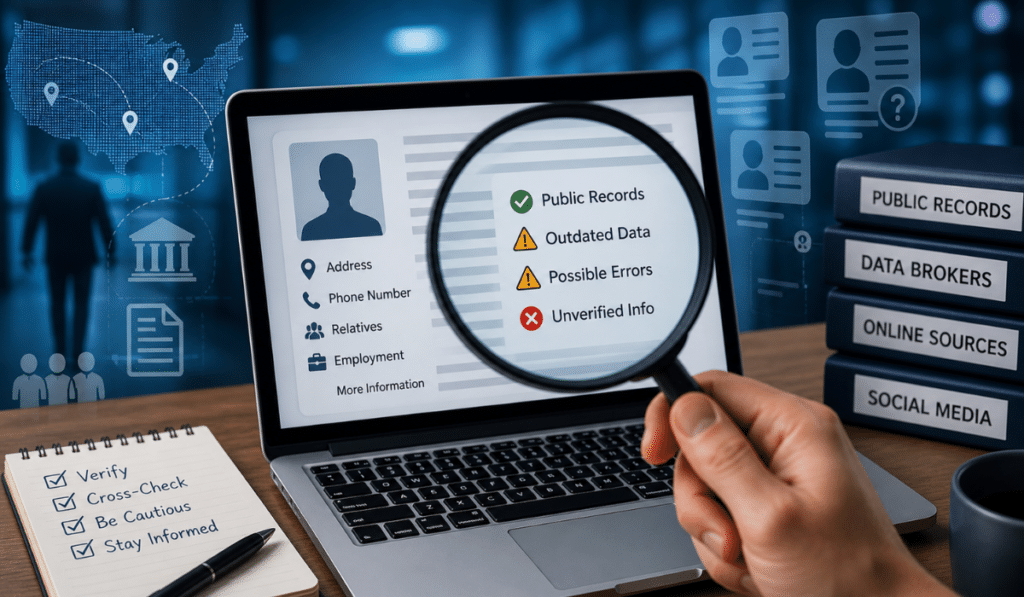
Accuracy is another major issue. Public record aggregators are not perfect. Old addresses remain attached to profiles for years. Phone numbers get reassigned. Duplicate profiles appear often. That’s why users comparing these platforms usually want to know which service offers cleaner results and fewer inaccuracies.
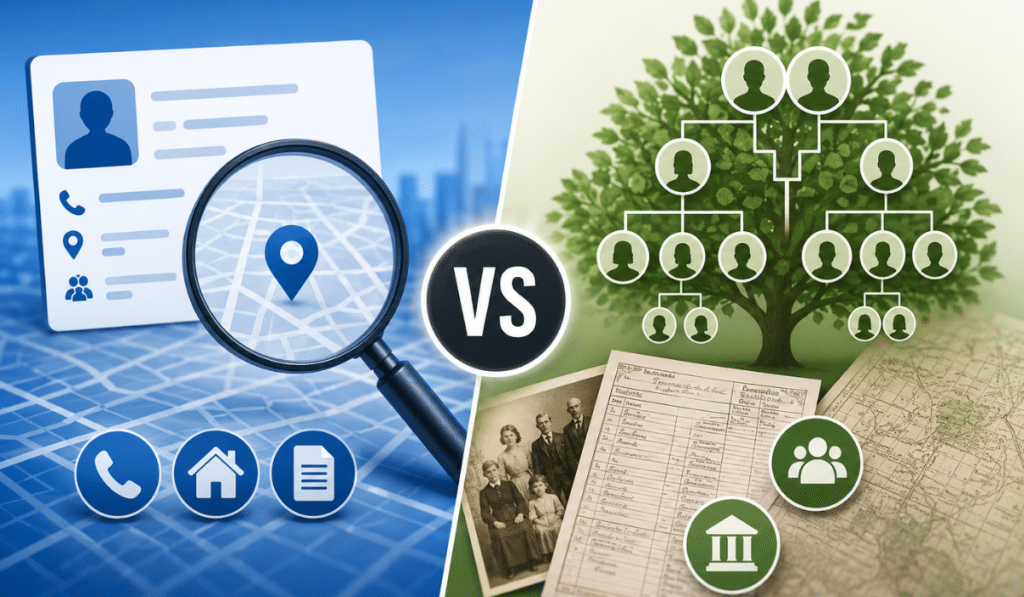
FastPeopleSearch and FamilyTreeNow serve similar purposes, but they approach people lookup differently. One focuses more on quick public record searches and reverse phone lookup functionality. The other leans more heavily toward family relationship mapping and genealogy-style data connections.
What is FastPeopleSearch?
FastPeopleSearch is a free people search website that allows users to search for individuals using names, phone numbers, or addresses. The platform is widely known because it provides a large amount of information without requiring payment for basic access.
The website primarily functions as a public records aggregation platform. It pulls information from multiple public and commercial sources and combines them into searchable profiles.
Users can perform several types of searches:
- Name search
- Reverse phone lookup
- Address lookup
- Email-related searches in some cases
- Relative and associate searches
One reason FastPeopleSearch became popular is its speed. Searches usually return results quickly, especially when compared to older public records databases that rely on slower directory-style navigation.
A typical FastPeopleSearch profile may include:
- Full name
- Approximate age
- Current and past addresses
- Phone numbers
- Known relatives
- Possible associates
- Property-related information
The reverse phone lookup feature is one of the platform’s most commonly used tools. If someone receives repeated calls from an unknown number, they can enter the number and potentially see the owner’s name and location. This is especially useful for identifying telemarketers, old contacts, or unfamiliar callers.
Address lookup is another common use case. A user can search an address to see previous residents or associated names. Property investors, landlords, and casual users sometimes use this feature when researching residential history.
The platform’s interface is relatively simple. Users can start searches from the homepage without registration. Results are displayed in a directory-style format with multiple possible matches based on state, city, and age range.
FastPeopleSearch is often used by:
- People reconnecting with old friends
- Users checking unknown callers
- Individuals verifying basic identity information
- Casual public records researchers
- Landlords conducting informal screening
- Users searching for previous addresses
The free access model is both a strength and a limitation. While the platform provides substantial information at no cost, users may encounter incomplete records, outdated data, and occasional redirects to paid partner websites for deeper reports.
Another issue users frequently mention in FastPeopleSearch review discussions is data freshness. Some profiles contain very old addresses or disconnected phone numbers. Since public records are updated at different times across jurisdictions, record accuracy can vary significantly.
Despite these limitations, FastPeopleSearch remains one of the better-known free people search websites in the United States because of its broad data access and straightforward search process.
What is FamilyTreeNow?
FamilyTreeNow started with a stronger genealogy and family-history focus than many traditional people search websites. While it also functions as a public records search platform, its structure emphasizes family connections, household relationships, and historical records more heavily than FastPeopleSearch.
The platform became widely known after users discovered how much personal information could appear publicly without registration or payment.
FamilyTreeNow allows searches by:
- Full name
- State
- City
- Phone number
- Address
The site organizes records differently from many general people finder websites. Instead of focusing mainly on current contact information, FamilyTreeNow often highlights:
- Family members
- Historical household records
- Age ranges
- Past residences
- Potential relatives
- Census-style associations
This genealogy-style structure appeals to users researching family history or trying to map household relationships over time.
For example, someone researching extended relatives may find older address histories and connected family names more useful than direct phone lookup functionality. In many cases, FamilyTreeNow displays relationship clusters that help users trace relatives across multiple locations and years.
A FamilyTreeNow profile may contain:
- Current and previous addresses
- Estimated age
- Relatives
- Associates
- Birth year estimates
- Possible phone numbers
- Historical household information
The platform gained attention partly because much of its information could be indexed directly in Google search results. Users searching their own names sometimes discovered detailed records publicly visible online, which triggered significant privacy concerns.
FamilyTreeNow’s interface is functional but less modern than some competitors. Results pages often contain dense lists of records with multiple related entries. Genealogy users may appreciate the additional context, while casual users may find the layout less streamlined.
Common FamilyTreeNow use cases include:
- Genealogy research
- Locating extended relatives
- Tracking historical address connections
- Researching family structures
- Reconnecting with relatives
- General public records searches
Compared to FastPeopleSearch, FamilyTreeNow is usually less focused on fast reverse phone lookup functionality. It performs better when users want broader family relationship mapping instead of quick contact verification.
Users discussing FamilyTreeNow review topics frequently mention the amount of historical household data available for free. However, concerns about outdated records and incorrect associations are also common.
Some profiles combine unrelated individuals with similar names. Others contain incomplete information or old address data that no longer reflects current residency.
Like many online background check tools, FamilyTreeNow relies heavily on aggregated public records. Accuracy depends on the underlying source databases and how recently records were updated.
FastPeopleSearch vs FamilyTreeNow – Feature Comparison
Search Accuracy
Search accuracy varies considerably between these platforms.
FastPeopleSearch tends to perform better for recent contact information. Users searching for active phone numbers or newer address histories may get cleaner results compared to FamilyTreeNow.
For example, if someone searches a recently updated mobile number, FastPeopleSearch may return a more current association.
FamilyTreeNow often excels at relationship mapping but can sometimes produce cluttered results with overlapping family records.
Both platforms struggle with:
- Common names
- Recently relocated individuals
- Reassigned phone numbers
- Duplicate profiles
Neither should be treated as a verified identity database.
Data Depth
FamilyTreeNow generally provides deeper historical relationship data.
Users researching long-term family connections may find:
- Older addresses
- Household associations
- Extended relatives
- Historical residency patterns
FastPeopleSearch usually focuses more on current searchable data and direct lookup functions.
If someone wants a quick overview of current contact-related records, FastPeopleSearch often feels more direct.
Family Relationship Mapping
This is one area where FamilyTreeNow has a stronger reputation.
Its structure is designed around connected individuals and family records. Users researching genealogy often prefer it because relationship visibility is more detailed.
For instance, a user tracing extended relatives across multiple states may uncover household patterns more easily through FamilyTreeNow.
FastPeopleSearch also shows relatives and associates, but family mapping is less central to the experience.
Reverse Phone Lookup
FastPeopleSearch is generally stronger for reverse phone lookup.
The search process is simpler:
- Enter a number
- Review associated names
- Check address history
FamilyTreeNow includes phone-related searches, but the experience is less optimized for rapid caller identification.
Users searching unknown callers usually prefer FastPeopleSearch because results appear faster and more directly.
Address History
Both platforms provide address history, but presentation differs.
FastPeopleSearch often displays cleaner chronological address records.
FamilyTreeNow sometimes includes broader household context tied to addresses, which can help genealogy researchers but may overwhelm casual users.
Example:
- A casual user checking a previous tenant may prefer FastPeopleSearch.
- A family historian researching multi-generational households may prefer FamilyTreeNow.
Criminal and Public Record Visibility
Neither platform operates like a full professional background screening service.
Public record visibility varies depending on jurisdiction and data source availability.
Users may occasionally see:
- Property records
- Court-related references
- Traffic-related records
- Civil filing information
However, comprehensive criminal background checks usually require paid services or official court searches.
Users should never rely solely on these platforms for employment, tenant screening, or legal decisions.
User Interface
FastPeopleSearch has a cleaner interface overall.
The homepage is straightforward and easier for first-time users.
FamilyTreeNow feels more database-oriented. Some users appreciate the detail-heavy structure, while others find navigation slower.
FastPeopleSearch typically requires fewer clicks to reach usable information.
Speed
FastPeopleSearch usually loads faster and delivers results more quickly.
FamilyTreeNow searches can occasionally feel slower because of broader relationship indexing and heavier record clustering.
For fast public records search tasks, FastPeopleSearch often provides a smoother experience.
Mobile Usability
Mobile usability matters because many users perform searches from smartphones.
FastPeopleSearch adapts better to mobile screens. Menus and search fields are easier to navigate.
FamilyTreeNow remains usable on mobile devices, but dense record layouts can become difficult to read on smaller screens.
Free Access Limitations
Both platforms advertise substantial free access, but limitations still exist.
Users may encounter:
- Incomplete records
- Missing updates
- Redirects to partner websites
- Partial reports
FastPeopleSearch generally exposes more immediately visible information without additional clicks.
FamilyTreeNow sometimes routes users toward external paid background check services for expanded data.
Ads and Redirects
Ads and redirects are common frustrations across free people finder websites.
FamilyTreeNow tends to contain more noticeable external links and sponsored redirects.
FastPeopleSearch usually feels cleaner, though users may still encounter third-party report offers.
Data Freshness
Data freshness is inconsistent on both platforms.
FastPeopleSearch often updates recent contact data faster.
FamilyTreeNow may retain older historical information longer, which helps genealogy research but increases outdated profile risks.
A phone number disconnected two years ago may still appear connected to an older profile on either platform.
Data Sources and Record Accuracy
People search websites rely on aggregated public and commercial data sources.
These may include:
- County property records
- Voter registration databases
- Court filings
- Phone directories
- Utility-related records
- Marketing databases
- Census-related information
- Social profile associations
- Data broker partnerships
Platforms like FastPeopleSearch and FamilyTreeNow do not manually verify every record. Instead, automated systems combine information from multiple datasets into searchable profiles.
That process creates several accuracy problems.
One major issue is outdated information. Public databases update at different speeds across jurisdictions. Someone who moved three years ago may still appear tied to an old address.
Duplicate profiles are another common problem. A person with a common name may appear across several records with conflicting details.
Phone numbers also create complications. Numbers get reassigned regularly. A reverse phone lookup may show the previous owner instead of the current one.
Missing records are common as well. Some counties digitize records slowly, while others restrict access entirely.
Users should also understand that relationship mapping is often probabilistic rather than verified. Two individuals appearing at the same address years ago may be labeled as associates or relatives even when no family relationship exists.
That’s why users should independently verify sensitive information.
People search websites are useful for casual research and general information gathering, but they are not official verification systems.
Anyone making important decisions involving identity verification, legal matters, hiring, or tenant screening should confirm information through official sources.
Privacy Concerns and Legal Questions
Is FamilyTreeNow Legal?
Yes, FamilyTreeNow operates legally under United States public records laws.
The platform aggregates information already available through public or commercial sources. Much of the controversy surrounding the website comes from how easily that information becomes searchable online.
Is FastPeopleSearch Legal?
FastPeopleSearch also operates within the framework of U.S. public records access laws.
Public record aggregation itself is generally legal in the United States, although regulations vary by state.
Neither platform creates most of the underlying records. They compile information from external databases and public filings.
Why These Websites Appear in Google Search
Search engines index publicly accessible pages.
If a people search platform allows profile pages to be crawled by Google, those records can appear directly in search results.
This became a major privacy debate because many individuals discovered their:
- Addresses
- Relatives
- Phone numbers
- Age estimates
were searchable publicly without their knowledge.
Opt-Out Processes
Both platforms provide opt-out mechanisms allowing users to request record removal.
The process usually involves:
- Finding your profile
- Submitting a removal request
- Verifying identity or email ownership
- Waiting for processing
Removal times vary.
Users should understand that opting out from one site does not automatically remove information from other data broker platforms.
Public Records Laws in the United States
Public records access laws differ by state and jurisdiction.
Many records remain publicly accessible because governments maintain transparency laws covering:
- Property ownership
- Court filings
- Business registrations
- Voter data in some states
People search websites aggregate these fragmented records into centralized search tools.
Privacy Debates Around People Search Websites
Privacy concerns remain significant.
Critics argue that these websites make personal information too easy to access.
Common concerns include:
- Stalking risks
- Harassment
- Doxxing
- Identity misuse
- Exposure of historical addresses
Supporters argue that public records have always existed and these platforms simply organize already available data.
The debate continues around where convenience crosses into excessive exposure.
Risks of Incorrect Information
Incorrect data can create real problems.
Examples include:
- Wrong relatives attached to profiles
- Incorrect phone ownership
- Outdated addresses
- Confused identities between people with similar names
These inaccuracies can affect reputation, privacy, and personal safety.
That’s why users should treat people search websites as informational tools rather than authoritative databases.
This article does not provide legal advice, and users should consult qualified professionals for legal questions related to public records or privacy law.
Which Platform is Easier to Use?
FastPeopleSearch is generally easier for casual users.
The search interface is cleaner and simpler. Users can quickly enter a name or phone number and move through results without much confusion.
The platform works especially well for:
- Reverse phone lookup
- Quick address checks
- Simple identity searches
FamilyTreeNow requires more navigation.
Its layout contains heavier record clustering and relationship-focused data structures. Genealogy researchers may appreciate the extra detail, but casual users sometimes find the interface cluttered.
Ads and redirects also affect usability.
FamilyTreeNow tends to display more external links and sponsored report pathways. FastPeopleSearch feels less crowded overall.
On mobile devices, FastPeopleSearch performs better. Search results scale more cleanly on smaller screens.
Search filtering is relatively basic on both platforms compared to paid online background check tools. Users usually narrow results using:
- State
- City
- Age ranges
- Relative names
Neither platform offers particularly advanced filtering.
For speed and simplicity, FastPeopleSearch has the advantage.
For relationship-focused browsing and family research, FamilyTreeNow provides more depth despite the heavier interface.
FastPeopleSearch vs FamilyTreeNow for Different Users
Genealogy Researchers
It emphasizes:
- Public records
- Court-related searches
- Contact information
- Background reports
Compared to FastPeopleSearch and FamilyTreeNow, most alternatives restrict detailed access behind paywalls.
Casual Users
- Public records
- Court-related searches
- Contact information
- Background reports
Compared to FastPeopleSearch and FamilyTreeNow, most alternatives restrict detailed access behind paywalls.
Reverse Phone Lookup Users
FastPeopleSearch performs better for reverse phone lookup searches.
Users dealing with unknown callers often want immediate identification.
The platform’s interface is more optimized for phone-based searching.
Reconnecting With Old Friends
Both platforms can help reconnect old contacts.
FastPeopleSearch is better when users already know approximate locations or phone numbers.
FamilyTreeNow may help when users remember relatives or historical family connections instead.
Verifying Identities
Neither platform should be treated as a professional identity verification system.
However, casual users sometimes use them to cross-check:
- Approximate age
- Address history
- Relative associations
- Phone ownership
FastPeopleSearch tends to provide quicker high-level verification.
Checking Address History
FamilyTreeNow may provide broader household context.
FastPeopleSearch usually presents cleaner chronological address records.
The better option depends on the purpose:
- Casual address verification → FastPeopleSearch
- Historical household research → FamilyTreeNow
Alternatives to FastPeopleSearch and FamilyTreeNow
Several other people search websites compete in the same space.
Whitepages
Whitepages is one of the oldest people finder websites in the United States.
It offers:
- Reverse phone lookup
- Address search
- Background reports
Basic information may be free, but many reports require payment.
TruePeopleSearch
TruePeopleSearch operates similarly to FastPeopleSearch with strong free access features.
It focuses heavily on:
- Phone numbers
- Address history
- Relative searches
Many users compare it directly against FastPeopleSearch because both provide substantial free results.
Spokeo
Spokeo combines public records with social and online profile aggregation.
It often provides cleaner interfaces and broader profile summaries, but deeper information usually requires a subscription.
BeenVerified
BeenVerified positions itself more as a paid background information platform.
It includes:
- Contact data
- Public records
- Social profiles
- Vehicle-related information in some cases
The platform focuses more heavily on subscription-based reports.
PeopleFinders
PeopleFinders has been operating for decades and offers both free previews and paid reports.
It emphasizes:
- Public records
- Court-related searches
- Contact information
- Background reports
Compared to FastPeopleSearch and FamilyTreeNow, most alternatives restrict detailed access behind paywalls.
Final Verdict
FastPeopleSearch and FamilyTreeNow both serve users looking for public records search tools, but they approach the task differently.
FastPeopleSearch works better for quick searches. Its cleaner interface, faster reverse phone lookup functionality, and simpler navigation make it more practical for casual users.
FamilyTreeNow is stronger for family relationship mapping and genealogy-style research. Users tracing relatives or historical household connections may find its deeper relationship structure more useful.
Neither platform is perfectly accurate.
Users should expect:
- Outdated records
- Duplicate profiles
- Old addresses
- Incomplete information
Privacy concerns also remain important. Both websites aggregate publicly available records that many users do not realize are easily searchable online.
For casual public information searches, both platforms can be useful starting points. For legal, employment, financial, or safety-related decisions, users should independently verify information through official and authoritative sources.
The better choice depends largely on the search goal:
- Fast searches and reverse phone lookup → FastPeopleSearch
- Family history and relationship mapping → FamilyTreeNow

I am Sandy Saga, the writer and content researcher behind FamilyTreeNow.net. I create clear, easy-to-understand informational content related to family history, people search resources, genealogy topics, and public information awareness. My goal is to help readers understand how online search tools and family research resources work in a simple and responsible way.
The content on FamilyTreeNow.net is published strictly for informational and educational purposes only. I focus on providing accurate, transparent, and reader-friendly information to help users explore and learn. This website does not offer official records, legal advice, or professional services — it exists solely as an independent informational resource.