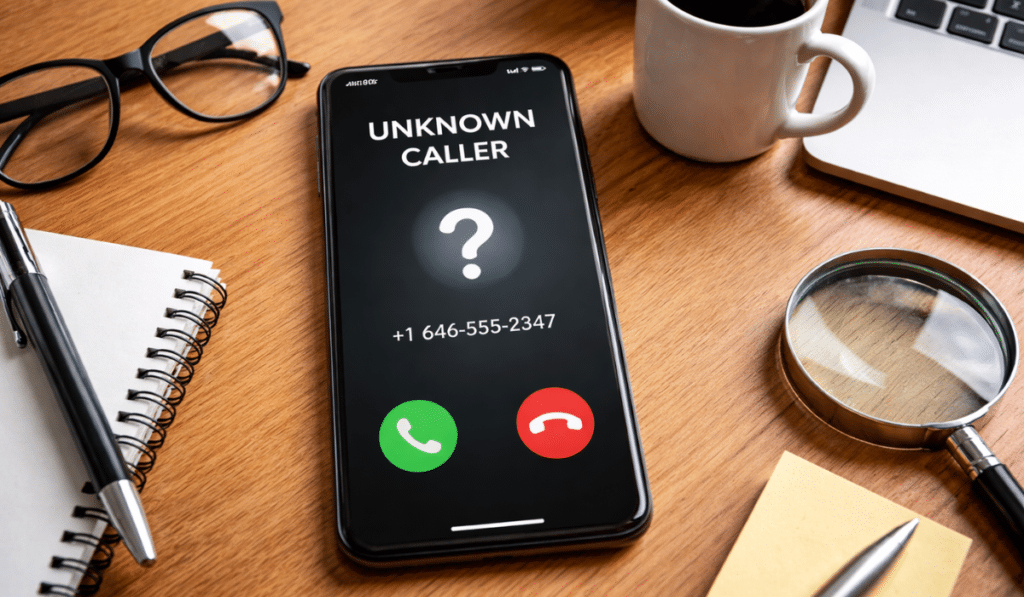
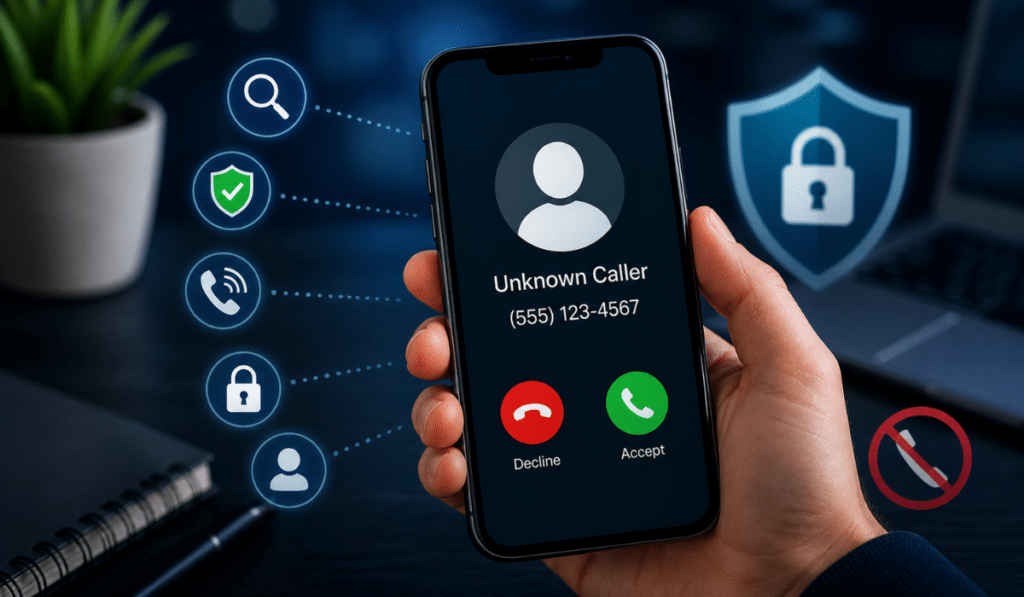
You see a missed call from an unknown number. No name, no caller ID—just a string of digits staring back at you. For a moment, you hesitate. Could it be something important? Or is it another scam trying to trick you?
That hesitation is real—and justified. In the United States, billions of robocalls are made every year, many of them tied to fraud schemes, fake offers, or identity theft attempts. Some calls pretend to be from banks, government agencies, or even local numbers that look familiar. Others rely on urgency—“your account is compromised” or “legal action is pending”—to push you into reacting quickly.
But here’s the problem: ignoring every unknown call isn’t always safe either. That missed number could be a recruiter, a hospital, or a financial institution trying to reach you.
So how do you strike the right balance?
This guide breaks down exactly how to identify unknown callers fast—without risking your privacy or falling into a scam. You’ll learn practical, real-world methods to find out who called you in seconds and what to do next.
Why You Should Never Ignore Unknown Calls
It’s tempting to ignore calls from numbers you don’t recognize. Most people do. But that habit can sometimes cost you important opportunities—or even delay urgent information.
Take job hunting, for example. Recruiters often call from direct lines or third-party systems that don’t display a recognizable name. If you ignore those calls, you might miss an interview or a follow-up that could move your application forward.
Banks and financial institutions are another example. If there’s suspicious activity on your account, fraud departments may call you from automated or unlisted numbers. Ignoring those calls could delay action on unauthorized transactions.
Then there are medical situations. Hospitals, clinics, or labs frequently reach out using unfamiliar numbers. Missing those calls could mean delayed test results, appointment updates, or critical health information.
However, answering every unknown call comes with its own risks.
Spam callers and scammers are getting smarter. Some calls are designed to confirm that your number is active—simply answering can lead to more spam in the future. Others may attempt phishing, trying to extract sensitive details like OTPs, banking credentials, or personal identifiers.
There’s also the issue of “spoofing,” where scammers mimic legitimate numbers. You might think you’re answering a local business or even your bank, but it’s actually a fraudulent call.
So you’re stuck between two risks:
- Ignore the call and potentially miss something important
- Answer the call and expose yourself to scams
That’s where a smarter approach comes in.
Instead of guessing, the better strategy is to identify the caller first—quickly and safely—before deciding whether to respond.
So how do you find out who’s behind that unknown number without putting yourself at risk?
What Are Unknown Callers?
Unknown callers aren’t just numbers you don’t recognize—they fall into several categories, each with different levels of risk.
The most basic type is a call with no caller ID. These appear as “Unknown,” “Private Number,” or “No Caller ID” on your phone. In many cases, these calls are intentionally hidden, making it impossible to identify the caller directly.
Then there are spoofed numbers. This is where things get more deceptive. Scammers use technology to manipulate the number that appears on your screen, often making it look like a local call or a trusted organization. This tactic increases the chances that you’ll pick up.
Robocalls are another major category. These are automated calls that deliver pre-recorded messages, often used for telemarketing or scams. While some robocalls are legitimate (like appointment reminders), many are designed to trick or pressure you into taking action.
What makes these calls particularly challenging is how easily identities can be masked. Modern VoIP (Voice over Internet Protocol) systems allow callers to generate numbers on demand, meaning the same scammer can appear as dozens of different callers within hours.
In short, an unknown call doesn’t just mean “someone you don’t know.” It often means the identity behind the call is intentionally obscured—making it even more important to verify before you respond.
Types of Unknown Calls in the USA
Not all unknown calls are the same. Understanding the category helps you decide how to respond—and how urgently.
a. Robocalls
Robocalls are automated calls that deliver pre-recorded messages. Some are legitimate—like appointment reminders or airline notifications—but a large portion are spam or outright scams.
Example: You answer, and a recorded voice says your car warranty is about to expire or you’ve been pre-approved for a loan. These calls are often blasted to thousands of numbers at once, hoping a small percentage will respond.
b. Telemarketing Calls
Telemarketing calls come from real companies trying to sell products or services. While legal under certain regulations, they can be persistent and intrusive—especially if your number has been shared or sold through lead-generation lists.
Example: A company offering credit card upgrades, insurance plans, or internet services calls you repeatedly, often from different numbers. Even if you block one, another may appear.
c. Scam / Fraud Calls
This is the most dangerous category. These calls are designed to manipulate, pressure, or trick you into sharing sensitive information or sending money.
Example: Someone claims to be from the IRS threatening legal action, or from your bank warning about “suspicious activity.” They create urgency to push you into acting without verifying. Many scams now sound highly convincing, sometimes even using partial personal data.
d. Silent Calls
Silent calls are unsettling—your phone rings, you answer, and there’s no one on the other end. These are often generated by automated dialing systems testing whether your number is active.
Example: You pick up, hear nothing, and the call disconnects after a few seconds. While it may seem harmless, it can flag your number as “live,” leading to more spam calls later.
e. Spoofed Local Numbers
Spoofing is when a caller deliberately disguises their number to appear local or familiar. This increases the likelihood you’ll answer.
Example: You receive a call from a number with the same area code—or even similar digits—to your own number. It looks trustworthy, but it could be a scammer operating from anywhere in the world.
The key takeaway: unknown calls aren’t random. Most fall into predictable patterns, and once you recognize them, you can respond more strategically instead of reacting blindly.
Fastest Ways to Identify Unknown Callers
If you’re relying on guesswork, you’re already at a disadvantage. The smarter approach is to verify the number first using reliable methods. Here are the fastest and most effective ways to identify unknown callers.
Method 1: Reverse Phone Lookup
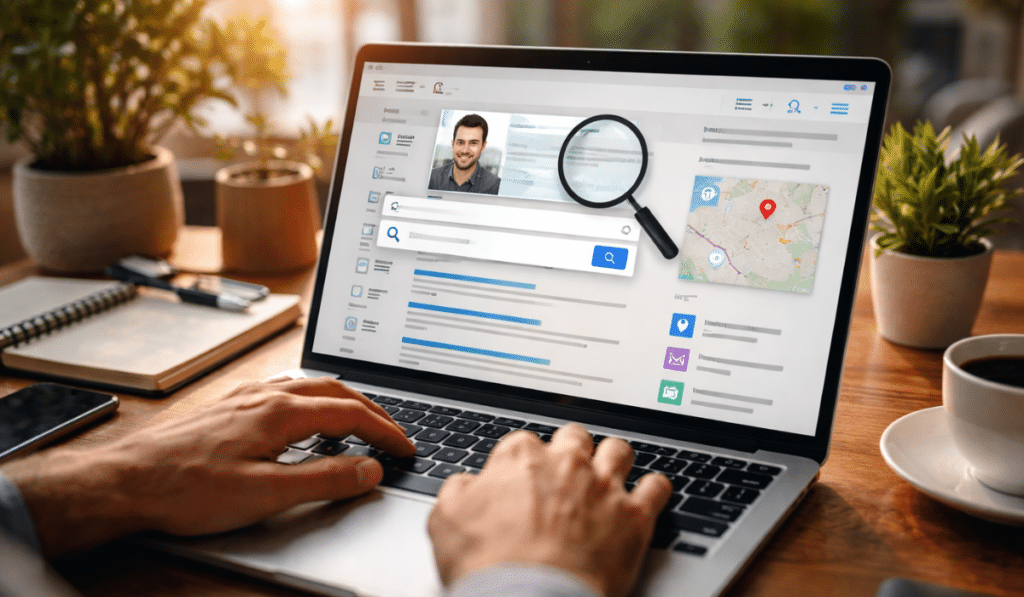
Reverse phone lookup is one of the most direct ways to identify a caller. Instead of searching for a person’s number, you start with the number and work backward to find the owner.
How it works:
These tools pull data from public records, telecom databases, and aggregated online sources. When you enter a phone number, the system scans for matches tied to names, addresses, or known associations.
Benefits:
- Quick results—often within seconds
- Can reveal name, location, and carrier
- Helps distinguish between personal numbers and business lines
- Reduces risk before calling back
For example, if you receive a missed call, a reverse lookup can tell you whether it’s linked to a legitimate business, a known spam source, or an individual. That clarity helps you decide your next move without taking unnecessary risks.
Method 2: Google Search Trick
Sometimes the simplest method works surprisingly well.
How to do it:
Type the phone number into Google using quotation marks, like this:
“+1 555-123-4567”
This forces an exact match search.
What to look for:
- Complaint forums reporting spam activity
- Business listings or directories
- Public profiles where the number is listed
- Scam alert websites
Example: If dozens of users report the same number as a scam, you’ll see it immediately in search results. On the other hand, if it’s tied to a legitimate business, you’ll likely find a website or listing confirming it.
This method is fast, free, and often your first line of defense.
Method 3: Social Media Search
Many people unknowingly link their phone numbers to social media accounts. This creates another opportunity to identify unknown callers.
Platforms to check:
How it works:
Enter the phone number into the search bar. Some platforms will display profiles associated with that number.
Example: A missed call might lead you to a LinkedIn profile of a recruiter or a business contact. On WhatsApp, simply saving the number temporarily can reveal a profile name or photo.
Limitations:
- Privacy settings may hide results
- Not all users link their numbers
- Results can be incomplete
Still, when it works, it provides immediate context about who’s trying to reach you.
Method 4: Caller ID Apps
Caller ID apps are designed to identify incoming calls in real time. They maintain large databases of known numbers and user-reported spam.
How they help:
- Show caller name before you answer
- Flag suspected spam or fraud calls
- Allow automatic blocking of certain numbers
Pros:
- Real-time identification
- Continuous updates from user reports
- Easy to use once installed
Cons:
- May require access to contacts and call data
- Not always 100% accurate
- Some features are behind paywalls
Example: If a number has been reported thousands of times as spam, the app will warn you instantly—saving you from even picking up.
Method 5: People Search Websites
People search websites take reverse lookup a step further by aggregating large volumes of public data into one place.
What they do:
These platforms compile information from public records, directories, and online sources to connect phone numbers with real identities.
What you can find:
- Full names
- Known locations
- Associated phone numbers
- Possible relatives or connections
This is where tools like FamilyTreeNow come into play. Instead of just telling you whether a number is spam, they help you understand who might be behind it by linking available public data.
For example, if a number doesn’t show up in a basic search, a people search platform might still identify it through historical records or related listings. This adds another layer of verification, especially when dealing with unfamiliar or persistent callers.
Why this matters:
- More comprehensive than basic lookup tools
- Useful for verifying unknown individuals
- Helps avoid false assumptions
Free vs Paid Lookup Services (300–400 words)
When you’re trying to identify an unknown caller, you’ll quickly run into two categories of tools: free lookup services and paid platforms. Both have their place—it’s less about which is “better” and more about when to use each.
Here’s a simple breakdown:
| Feature | Free Tools | Paid Tools |
|---|---|---|
| Basic Info | ✔ | ✔ |
| Full Identity | ❌ | ✔ |
| Background Data | ❌ | ✔ |
Free tools are ideal for quick checks. If your goal is to determine whether a number is spam, telemarketing, or linked to a known business, free methods often get the job done. A Google search, basic reverse lookup, or a caller ID app can reveal user reports, business listings, or general location data within seconds.
Example: You search a number and find multiple complaints labeling it as a scam. That’s enough to block and move on—no need to dig deeper.
However, free tools tend to hit a wall when you need verified identity details. They rarely provide full names, accurate ownership records, or deeper context about the caller.
That’s where paid tools come in.
Paid lookup services are designed for situations where accuracy matters more than speed. They aggregate broader datasets, often including public records, historical data, and cross-referenced sources. This allows them to connect a phone number to a specific individual or household with higher confidence.
You might need a paid tool when:
- The call seems important but unclear
- The number isn’t flagged as spam but still feels suspicious
- You’re dealing with repeated calls from the same unknown number
- You want confirmation before calling back
In short:
- Use free tools for filtering
- Use paid tools for verification
That distinction saves both time and unnecessary expense while keeping your decision-making precise.
How People Search Websites Help
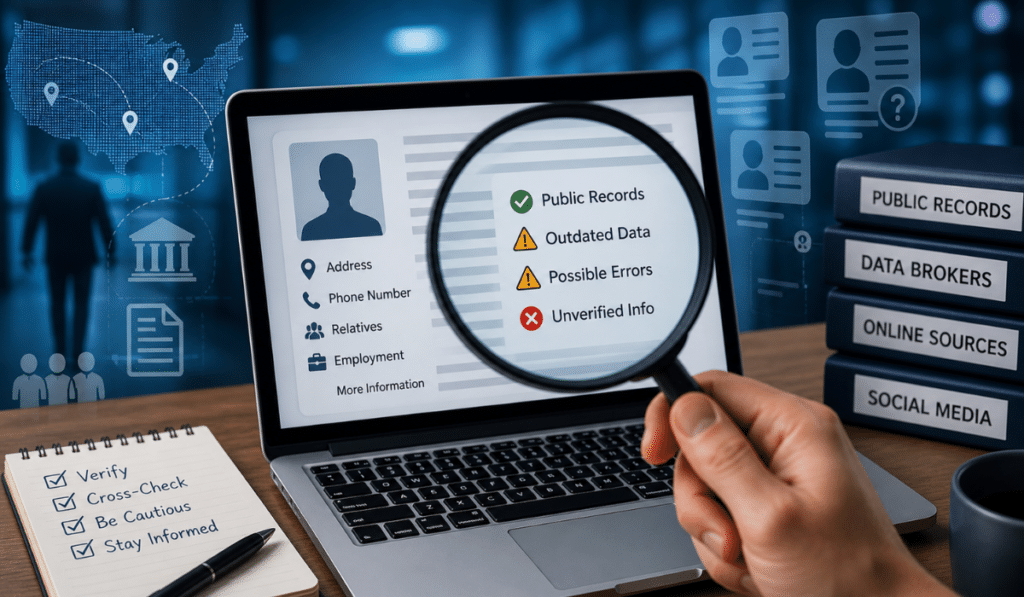
People search websites operate on a different level compared to basic lookup tools. Instead of relying on surface-level data, they aggregate information from multiple structured and semi-structured sources to build a more complete identity profile.
Database aggregation is the core of how these platforms work. They pull data from public directories, property records, voter registrations, business filings, and other legally accessible datasets. Individually, these records may seem disconnected—but when combined, they create meaningful links between names, numbers, and locations.
Public records play a major role here. In the United States, a significant amount of personal data is legally accessible through public databases. People search platforms index and organize this information so it can be queried quickly using inputs like a phone number.
This is where phone-owner linking becomes valuable. Instead of just identifying whether a number exists, these systems attempt to associate it with a real individual by cross-referencing multiple data points—such as past listings, address records, or shared contact information.
In some cases, you may also see associated addresses or possible relatives. This isn’t about digging into someone’s private life—it’s about validating whether the identity connected to a number makes sense. For example, if a number links to a name and a consistent location history, that increases confidence in the result.
Platforms like FamilyTreeNow fit into this ecosystem by providing access to aggregated public data in a structured format. Rather than jumping between multiple tools, you can check one place to see if a number connects to a broader identity footprint.
The advantage here is clarity. When basic tools give you fragments, people search websites help assemble those fragments into something you can actually act on—whether that means returning a call, ignoring it, or blocking it entirely.
Step-by-Step: How to Identify a Caller in Seconds
Speed matters—but only if it doesn’t compromise accuracy. A structured approach lets you identify unknown callers quickly without exposing yourself to risk.
Here’s a practical workflow you can follow every time:
Step 1: Copy the Number
Start by copying the full phone number exactly as it appears, including the country code if available. Small errors here can lead to completely different results, so accuracy is critical.
Step 2: Search Online
Paste the number into Google using quotes. This forces an exact match search and helps surface:
- Spam reports
- Business listings
- Forum discussions
- Complaint databases
If the number has been widely reported, you’ll know immediately.
Step 3: Use Reverse Lookup
Next, run the number through a reverse phone lookup tool. This helps identify:
- General location
- Carrier information
- Whether it’s a mobile, landline, or VoIP number
At this stage, you’re determining whether the call looks legitimate or suspicious.
Step 4: Verify Identity
If the number still isn’t clear, move to a deeper verification step using a people search platform like FamilyTreeNow.
Here, you’re looking for consistency:
- Does the name match the number?
- Is the location logical?
- Are there supporting data points (like past records)?
If multiple elements align, you can be more confident about who’s behind the call.
Step 5: Take Action (Call Back, Block, or Report)
Once you’ve identified the caller, decide your next move:
- Legitimate contact → Call back safely
- Unclear but non-threatening → Wait or monitor
- Spam or scam → Block the number and report it
Why This Works
This process removes guesswork. Instead of reacting emotionally—answering out of curiosity or ignoring out of fear—you’re making a decision based on verified information.
And the entire workflow? It typically takes less than a few minutes.
That’s the difference between being reactive and being in control.
How to Protect Yourself from Scam Calls
Scam calls aren’t random—they’re engineered to exploit urgency, fear, and trust. The goal is simple: get you to act before you think. Protecting yourself comes down to a few disciplined habits that remove that advantage.
- Never share OTPs or banking information
No legitimate institution will ask for one-time passwords, PINs, or full account details over an unsolicited call. If a caller claims to be from your bank or a government agency and asks for sensitive data, treat it as a red flag. End the call and contact the organization through its official website or number. - Use the Do Not Call Registry (USA)
Register your number with the National Do Not Call Registry. It won’t stop all unwanted calls—especially illegal ones—but it significantly reduces legitimate telemarketing outreach. If you continue receiving sales calls after registering, those callers are likely violating regulations. - Block suspicious numbers proactively
If a number shows consistent spam behavior or you’ve confirmed it’s fraudulent, block it immediately. Modern smartphones and caller ID apps allow quick blocking and filtering. While scammers rotate numbers, blocking still reduces repeat exposure. - Report scam activity to the FTC
Reporting helps build enforcement cases and improves public warning systems. Use the Federal Trade Commission complaint portal to submit details about suspicious calls. The more data regulators have, the easier it becomes to track patterns and shut down large-scale operations. - Don’t engage—disengage
Even a short conversation can confirm your number is active. If a call feels suspicious, don’t press buttons, don’t respond to prompts, and don’t argue. Hang up. Engagement is often exactly what scammers want. - Verify before you respond
If the call claims urgency (fraud alert, legal notice, delivery issue), verify independently using official channels. Pair this with the identification methods you’ve learned—lookup first, act second.
The principle is straightforward: reduce exposure, verify claims, and never provide sensitive data under pressure.
Legal Considerations in the USA
Using tools to identify unknown callers is legal in the United States—but there are boundaries you need to respect.
- Public data usage
Most lookup and people search services rely on publicly available records. Accessing and viewing this information is generally lawful, as long as it’s used for legitimate, non-harmful purposes. The key distinction is between access and misuse. - Privacy boundaries
Even if information is publicly accessible, that doesn’t grant permission to harass, intimidate, or exploit someone. Using lookup data to stalk, threaten, or discriminate can lead to legal consequences. Treat any retrieved information as sensitive, even if it’s technically public. - Telephone Consumer Protection Act (TCPA)
The Telephone Consumer Protection Act governs how businesses can contact consumers. It restricts robocalls, auto-dialing systems, and unsolicited marketing messages without consent. If you’re receiving illegal robocalls or spam texts, those callers may be violating TCPA provisions. - Ethical use of lookup tools
Tools like FamilyTreeNow are designed for transparency and verification—not intrusion. Use them to confirm identities, avoid scams, or reconnect with legitimate contacts. Avoid using them to profile individuals unfairly or draw conclusions without proper context.
In short: identifying a caller is legal; misusing the information is not. Stay within that line, and these tools remain both effective and compliant.
Common Mistakes People Make
Even with the right tools available, many people still fall into patterns that increase risk or waste time. These are the most common mistakes—and why they matter.
- Calling back immediately
A missed call can trigger curiosity or concern, but returning it without verification is risky. Some scams rely on callbacks to premium-rate numbers or to confirm your number is active. Always identify the caller first before dialing back. - Trusting caller ID blindly
Caller ID is no longer a reliable signal. With number spoofing, scammers can make calls appear as if they’re coming from local businesses, government agencies, or even familiar numbers. Assuming legitimacy based on what shows on your screen is a common—and costly—mistake. - Using unreliable tools
Not all lookup services are accurate. Some free tools provide outdated or incomplete data, which can lead to false assumptions. Relying on a single, low-quality source can misidentify callers or miss important context entirely. - Ignoring repeated unknown calls
While ignoring one-off spam calls is fine, repeated calls from the same unknown number shouldn’t be dismissed. It could be a legitimate attempt to reach you—such as a recruiter, healthcare provider, or financial institution. The right move isn’t to ignore—it’s to verify.
The pattern here is simple: reacting too quickly or not at all. A short verification step avoids both extremes.
Conclusion
Unknown calls aren’t going away—but the way you handle them can change completely.
Instead of guessing, ignoring, or reacting out of urgency, you now have a structured approach: identify first, then decide. Whether it’s a missed opportunity or a potential scam, the difference comes down to verification.
Free tools can filter obvious spam. Deeper lookup methods can confirm real identities. And when used together, they give you control over a situation that usually feels uncertain.
The key is consistency. Every unknown number should go through the same process—search, verify, evaluate. That habit eliminates unnecessary risk while keeping you reachable for what actually matters.
Before calling back, always verify the number using a trusted people search tool like FamilyTreeNow.
FAQs
- Can I find out who called me for free?
Yes, in many cases you can identify basic details using free methods like Google search, caller ID apps, or limited reverse lookup tools. These can reveal whether a number is associated with spam, a business, or a general location. However, for full identity details, free tools often fall short. - Are reverse lookup tools legal in the USA?
Yes. Reverse phone lookup services are legal as long as they use publicly available data and are not used for illegal purposes. Laws like the Telephone Consumer Protection Act regulate how calls are made—not your ability to identify who is calling you. - Why do scammers use local numbers?
This tactic is known as spoofing. Scammers manipulate caller ID to display a number with your local area code—or one that looks familiar—because people are more likely to answer calls they recognize. It increases engagement, which is exactly what scammers want. - What happens if I answer spam calls?
In some cases, nothing happens immediately. But answering can signal that your number is active, leading to more calls in the future. In more aggressive scams, the caller may attempt phishing—asking for personal or financial information—or use pressure tactics to push quick decisions. - Is it safe to use people search websites?
Yes, as long as you use reputable platforms and understand their purpose. Tools like FamilyTreeNow rely on public records to help identify callers. They’re meant for verification—not misuse.

I am Sandy Saga, the writer and content researcher behind FamilyTreeNow.net. I create clear, easy-to-understand informational content related to family history, people search resources, genealogy topics, and public information awareness. My goal is to help readers understand how online search tools and family research resources work in a simple and responsible way.
The content on FamilyTreeNow.net is published strictly for informational and educational purposes only. I focus on providing accurate, transparent, and reader-friendly information to help users explore and learn. This website does not offer official records, legal advice, or professional services — it exists solely as an independent informational resource.