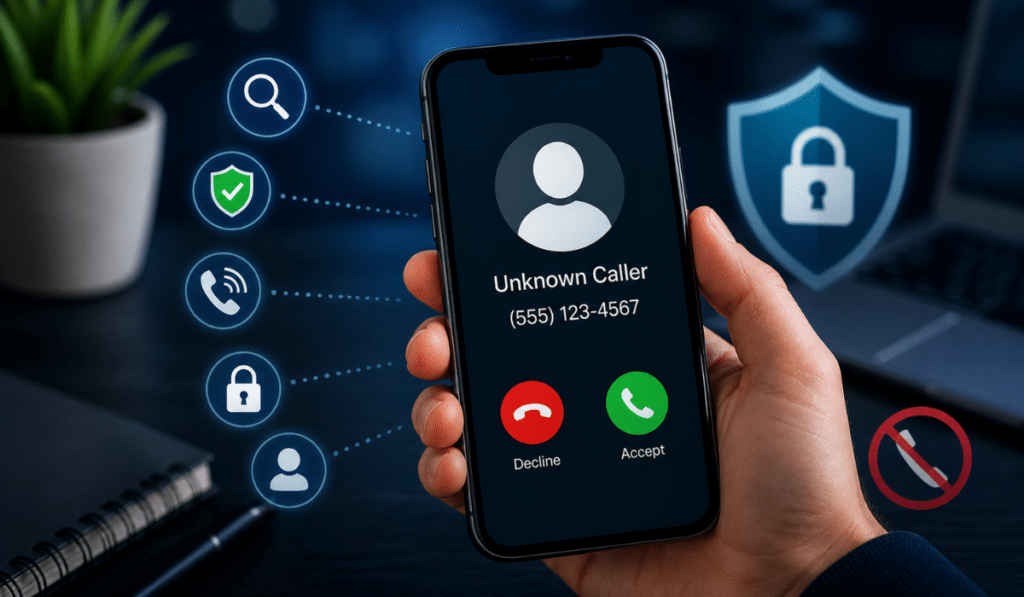

You know the situation. Your phone rings, you glance at the screen, and it’s a number you don’t recognize. No name, no context—just ten digits. Maybe you ignore it. Maybe they call again. And again. Eventually curiosity wins, or maybe concern does.
I’ve been there more times than I can count. Sometimes it’s harmless—a delivery driver or a dentist’s office. Other times, it’s persistent spam or something that feels… off. Over time, you start noticing patterns, figuring out which calls matter and which don’t. And that’s where reverse phone lookup becomes less of a “tech trick” and more of a practical tool you end up relying on.
This guide isn’t theory. It’s based on what actually works, what wastes time, and how to approach unknown numbers without overthinking—or underestimating—the situation.
What Reverse Phone Lookup Really Means (Without the Technical Fluff)
At its core, reverse phone lookup is simple: you take a phone number and try to trace it back to a person, business, or at least some kind of identity.
But in practice, it’s not one method—it’s a mix of small tactics.
Sometimes you paste the number into Google and immediately get results. Other times, you dig through social media, messaging apps, or caller ID tools. And occasionally, you hit a dead end because the number is brand new, private, or deliberately masked.
There isn’t a single “database” that knows everything. What you’re really doing is piecing together fragments from:
- Public records
- User-reported data
- Online profiles
- Business listings
- Past complaints
Think of it less like a search engine and more like light investigative work. You’re connecting dots, not just pulling a file.
When You Actually Need Reverse Phone Lookup
Not every unknown call deserves attention. But some do.
A few situations where this becomes genuinely useful:
You miss a call during work hours. No voicemail. Just a number. Could be a recruiter, a client, or something important. Ignoring it feels risky.
Or you start getting repeated calls late at night. Same number. No message. That’s not curiosity anymore—that’s something you want to identify quickly.
Then there are marketplace situations. If you’ve ever sold something online, you know how often strangers reach out. Most are fine. Some aren’t. A quick lookup can tell you whether the number has a history.
Dating apps are another gray area. You exchange numbers, and suddenly you’re wondering if that person is who they said they are. A lookup won’t give you everything, but it can confirm or raise questions.
And then there’s the obvious one: spam. Robocalls, fake IRS warnings, “your car warranty” nonsense. Once you start recognizing these patterns, lookup becomes a filtering system.
The Different Ways to Look Up a Phone Number (And What Actually Works)
There’s no single method that works every time. The key is knowing which approach to try first—and when to move on.
Starting With Google (Yes, Really)
It sounds basic, but it’s still one of the most effective first steps.
Paste the number exactly as it appears. Then try variations:
- With country code (+1)
- Without spaces or dashes
- With quotes around the number
You’d be surprised how often this works. Business numbers, customer service lines, and even some spam numbers show up immediately.
What you’ll usually find:
- Business listings
- Complaint forums
- Old directory pages
- Cached results from lookup sites
It’s quick, and it often gives you enough context to decide whether to dig deeper.
Social Media and Messaging Apps
This is where things get interesting.
Many people link their phone numbers to profiles without realizing how searchable they are.
Try checking:
- Facebook search
- LinkedIn (especially for business contacts)
- WhatsApp profile preview
- Telegram or Signal (depending on usage)
Even if you don’t get a full profile, you might see:
- A name
- A profile picture
- A business logo
That alone can shift your understanding of the call.
Dedicated Lookup Tools
This is where most people go—but also where expectations get unrealistic.
Free tools can be useful, but they rarely give complete information. They’re better for:
- Identifying spam patterns
- Seeing if others reported the number
- Getting general location data
Paid tools promise more—background reports, address history, associated names—but results can vary widely depending on how much data exists for that number.
The trick is not to rely on just one tool. Cross-checking matters.
Caller ID Apps (Real-Time Filtering)
Apps like Truecaller or Hiya take a different approach. Instead of searching after the fact, they identify calls as they come in.
They work by using massive user-contributed databases. If enough people label a number as spam, you’ll see that warning instantly.
From experience, these apps are especially effective for:
- Telemarketing calls
- Known scam numbers
- Frequently reported robocalls
But they’re not perfect. New numbers can slip through.
The Best Free Tools (And What They’re Actually Good For)
Let’s be honest—most people don’t want to pay just to identify a number. And in many cases, you don’t need to.
Here’s how the commonly used tools behave in real-world use:
Truecaller
Probably the most widely used. It’s strong for identifying individuals and spam patterns, especially if the number has been reported before.
Where it works best:
- Personal numbers
- Frequently used business lines
Where it struggles:
- Brand new numbers
- Private or masked numbers
Whitepages
More traditional. It leans toward public records and directory-style data.
Useful for:
- Landlines
- Older numbers
- Address-linked searches
Less useful for mobile-first or newer numbers.
NumLookup
Fast and simple. You paste a number, and it gives basic details.
Good for:
- Quick checks
- Location hints
Don’t expect deep reports—it’s more of a surface-level tool.
SpyDialer
This one is a bit different. It can sometimes access voicemail previews or associated metadata.
Occasionally helpful, but not something you’d rely on daily.
Google (Again)
It deserves a second mention because it often outperforms dedicated tools for certain cases—especially business-related numbers.
Also Read: Best Free People Search Websites (Complete Guide)
How I Actually Do a Reverse Lookup (Step by Step)
Over time, you develop a routine. Here’s what that looks like in practice:
First, I search the number on Google. It’s quick, and sometimes that alone solves it.
If nothing useful shows up, I check messaging apps—especially WhatsApp. Even a profile photo can be enough to identify whether the call was personal, business, or spam.
Next, I use a lookup tool like Truecaller. If the number has any history, it usually shows up here.
Then I cross-check. If two sources suggest the same thing, it’s probably reliable.
If everything comes back empty, I assume one of three things:
- It’s a new number
- It’s intentionally hidden
- It’s not worth chasing further
That last one matters more than people think.
How Accurate Are These Results?
This is where expectations need to be realistic.
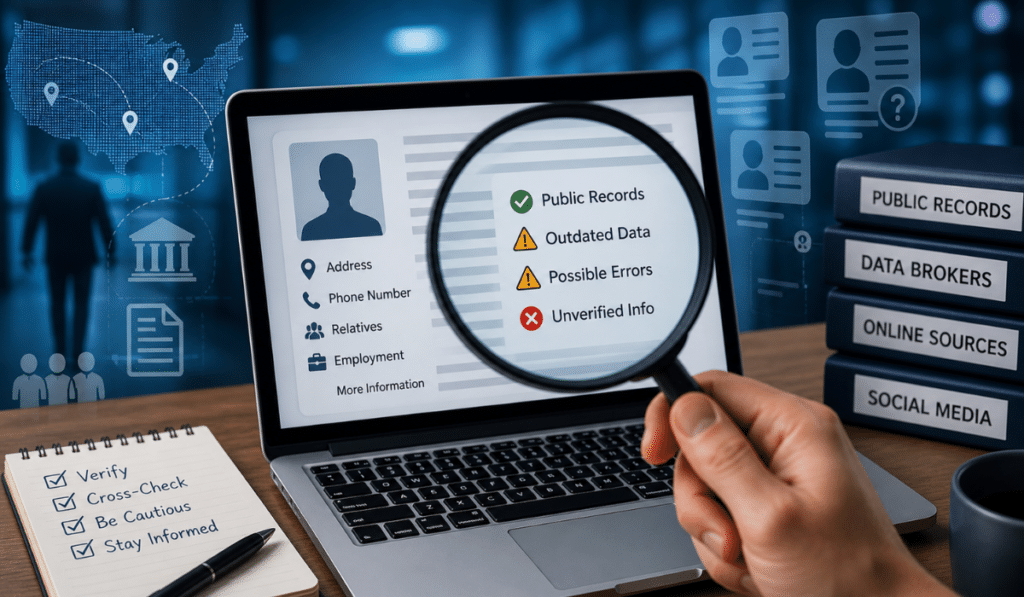
Reverse phone lookup isn’t magic. It’s only as good as the data available.
Accuracy depends on:
- How long the number has been active
- Whether it’s linked to public profiles
- If people have reported it
- The type of number (mobile vs VoIP vs landline)
In the U.S., coverage is generally decent, especially for business and frequently used numbers. But personal mobile numbers can still be hit-or-miss.
If you get consistent results across multiple sources, you can trust it. If not, treat it as a clue—not a conclusion.
Is It Legal to Look Up a Phone Number?
Short answer: yes, as long as you’re using publicly available information.
Reverse lookup tools pull from:
- Public records
- User-submitted data
- Open directories
What crosses the line is how you use that information. Looking up a number is fine. Harassing someone or misusing personal data isn’t.
Most people use these tools for basic identification, not surveillance—and that’s where they’re meant to stay.
Mistakes That Waste Time (and Sometimes Lead You Wrong)
One of the biggest mistakes is trusting the first result you see. Not all data is current, and not all of it is accurate.
Another common issue is assuming every unknown number is suspicious. Sometimes it’s just a doctor’s office calling from a different line.
People also fall for overly aggressive “premium report” sites that promise everything but deliver very little.
And then there’s the habit of over-searching—spending 20 minutes chasing a number that doesn’t really matter.
Knowing when to stop is just as important as knowing where to look.
Free vs Paid Lookup: When It’s Worth Paying
Most of the time, free tools are enough.
They handle:
- Spam detection
- Basic identification
- Quick verification
Paid tools come into play when you need deeper context—like verifying someone’s identity in a business or legal situation.
Even then, it’s not guaranteed. If the data doesn’t exist, no tool can invent it.
So the decision isn’t about “free vs paid”—it’s about how important the answer is.
Getting Better Results Without Overcomplicating It
A few small adjustments can improve your success rate:
Try different formats of the number. Sometimes databases store them differently.
Use multiple sources instead of relying on one.
Check messaging apps—even if you don’t plan to contact the person.
Pay attention to patterns. If a number looks similar to others you’ve received, it might be part of a spam cluster.
And most importantly, don’t expect perfection. You’re gathering signals, not absolute truth.
Where Reverse Phone Lookup Falls Short
There are limits, and you’ll run into them.
Burner numbers—used once and discarded—leave almost no trace.
VoIP numbers can be routed through multiple systems, making them harder to track.
Private or blocked numbers? You won’t get anything meaningful there.
And newer numbers often haven’t built any digital footprint yet.
This isn’t failure—it’s just the nature of how phone systems work today.
Final Thoughts
Reverse phone lookup isn’t about uncovering everything. It’s about reducing uncertainty.
Most of the time, you’re not trying to build a full profile—you just want to know: Should I call back? Should I ignore this? Is this safe?
With the right approach, you can answer those questions quickly.
Start simple. Cross-check when needed. Don’t overthink it.
And after a while, you’ll notice something—your instinct improves. You’ll recognize patterns, spot spam faster, and spend less time wondering who’s on the other end of that unknown number.
Also Read: How to Find Someone Online for Free
Also Read: How to Trace Family Connections Through Addresses (Step-by-Step Guide)

I am Sandy Saga, the writer and content researcher behind FamilyTreeNow.net. I create clear, easy-to-understand informational content related to family history, people search resources, genealogy topics, and public information awareness. My goal is to help readers understand how online search tools and family research resources work in a simple and responsible way.
The content on FamilyTreeNow.net is published strictly for informational and educational purposes only. I focus on providing accurate, transparent, and reader-friendly information to help users explore and learn. This website does not offer official records, legal advice, or professional services — it exists solely as an independent informational resource.