The internet has made public information easier to access than ever before. Today, thousands of people search websites and online records databases collect information from government records, commercial databases, and online activity to create searchable profiles about individuals. These companies are commonly known as data brokers.
The topic of how data brokers collect information from public records has become increasingly important for people concerned about online privacy, identity theft, and digital exposure. Many consumers are surprised when they search their own name online and discover phone numbers, addresses, relatives, court records, or property ownership details appearing on people search websites.
Public records themselves are not new. Government agencies in the United States have maintained property records, court filings, business registrations, and voter records for decades. What changed is the scale at which companies now collect, organize, and distribute this information online.
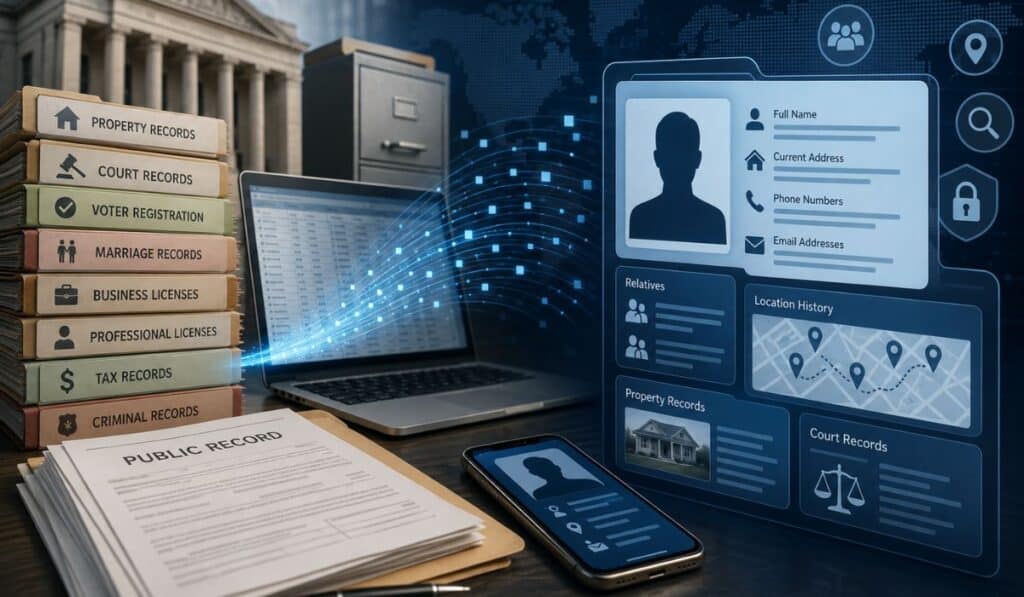
Modern data broker websites use automated systems to gather information from county databases, court systems, marketing records, social media platforms, and other public sources. They combine these records into searchable profiles that can often be accessed within seconds.
Understanding how this process works helps consumers make informed decisions about privacy, personal security, and online reputation management.
What Are Public Records?
Public records are documents or databases maintained by government agencies that are legally available to the public under federal, state, or local laws. These records support government transparency and accountability.
Different states have different rules regarding what information can be publicly accessed. Some records are fully open online, while others require formal requests or in-person visits.
Property Records
Property records are among the most commonly used sources for data broker websites. County assessor and recorder offices maintain detailed information about real estate ownership and property taxes.
These records may include the owner’s name, mailing address, purchase history, assessed value, mortgage filings, and parcel information.
Because property records are updated regularly and often searchable online, they provide reliable data for people search websites and address lookup databases.
Court Records
Court systems generate large amounts of public information every year. Civil lawsuits, criminal charges, bankruptcy filings, traffic violations, and probate cases may all become part of the public record.
Many state and county courts now publish searchable online databases. Data brokers frequently collect information from these systems and add it to background check websites and online personal information databases.
Marriage And Divorce Records
Marriage licenses and divorce filings are commonly stored by county clerks or state vital records offices. These records help data aggregators identify family relationships, name changes, and household connections.
Some states limit public access to recent records, while older records may become widely searchable online.
Voter Registration Records
Voter registration databases are public in many states. Depending on local laws, these records may contain names, addresses, registration dates, and political districts.
Data broker companies often use voter registration information to verify addresses and identity matches.
Business And Professional Licenses
States maintain public databases for business entities and professional licensing boards. Lawyers, doctors, contractors, real estate agents, and many other licensed professionals often appear in searchable public records systems.
These records can reveal employment details, business affiliations, office locations, and licensing status.
Criminal Records
Criminal records are another major source of public data collection. Arrest records, court convictions, sentencing details, inmate information, and mugshots may become accessible through county or state databases.
Some background check websites collect this information automatically and publish searchable reports online.
What Are Data Brokers?
Data brokers are companies that collect, organize, analyze, and distribute information about individuals. Their business model revolves around gathering data from multiple sources and turning it into searchable or marketable consumer profiles.
Some data broker websites focus mainly on public records search services, while others specialize in advertising, marketing analytics, identity verification, or fraud prevention.
How Data Brokers Operate
Most consumer data brokers use automated systems known as web crawlers, scrapers, or aggregation tools. These systems scan public databases and collect information continuously.
The data is then cleaned, organized, and connected into profiles using algorithms that match names, addresses, phone numbers, relatives, and other identifiers.
Companies may sell access through subscriptions, advertising systems, lead generation services, or background check reports.
Types Of Data Broker Companies
Different types of data brokers exist in the marketplace.
People Search Websites
People search websites allow users to search for individuals by name, address, phone number, or email address. These platforms often display current and previous addresses, relatives, age ranges, and contact information.
Marketing Data Brokers
Marketing-focused data brokers collect information about shopping behavior, demographics, browsing activity, and consumer interests. Advertisers use this data to target audiences with personalized advertisements.
Background Check Companies
Background check companies specialize in identity verification, criminal record searches, tenant screening, and employment screening services.
These businesses may collect information from both public and commercial sources.
How Data Brokers Collect Information From Public Records
The process of public data collection involves multiple systems working together. Most data brokers do not rely on one source alone. Instead, they combine information from government databases, commercial datasets, online tracking systems, and user-generated content.
County Databases
County governments maintain enormous collections of public records. Property ownership databases, tax assessment systems, deed transfers, and local court records are often accessible online.
Data broker websites regularly collect and update information from county systems using automated software.
For example, if someone purchases a home, that transaction may eventually appear in public property databases. Data aggregators can then associate that address with the individual’s profile.
State Records Systems
State agencies provide another major source of information. Business registration records, licensing boards, criminal databases, and voter registration systems are commonly accessed by data brokers.
Some states provide downloadable datasets that companies can analyze and incorporate into larger databases.
Federal Records
Federal databases also contribute to public profiles. Bankruptcy filings, federal court cases, campaign contribution records, and SEC business filings may all become searchable online.
Although federal records are often less detailed than local databases, they still help brokers verify identities and relationships.
Court System Collection
Modern court systems increasingly use online portals. Civil lawsuits, criminal proceedings, traffic violations, and probate cases may all appear in digital databases.
Data brokers collect these filings and integrate them into background check websites and online records databases.
In some cases, even dismissed cases or outdated filings may remain searchable online for years.
Property Tax Databases
Property tax databases are especially valuable to data brokers because they contain structured, regularly updated information.
These databases often include:
- Property owner names
- Mailing addresses
- Assessed property values
- Tax payment histories
- Parcel identification numbers
This information helps people search websites connect individuals to residential locations.
Social Media Scraping
Public social media information is another major source of online personal information.
Data brokers may collect publicly visible:
- Usernames
- Profile photos
- Location tags
- Public posts
- Friend lists
- Employment details
Even when users do not directly provide information to data brokers, public social profiles may still become indexed.
Marketing Databases
Many companies buy consumer information from retailers, survey companies, loyalty programs, and advertising networks.
This commercial data may include:
- Shopping habits
- Household income estimates
- Product interests
- Consumer demographics
Data brokers combine this information with public records to create more detailed consumer profiles.
Online Forms And Surveys
People often voluntarily share personal information online without realizing how widely it may circulate later.
Newsletter subscriptions, contest entries, survey forms, and product registrations can all become part of larger marketing databases.
These datasets are frequently bought and sold between companies.
Mobile Apps And Tracking Systems
Some mobile applications collect device identifiers, location history, usage behavior, and contact information.
Depending on the app’s privacy policy, portions of this data may be shared with third-party analytics or advertising companies.
This tracking data helps data brokers understand user behavior patterns.
Website Cookies And Advertising Technology
Advertising networks use cookies, tracking pixels, browser fingerprinting, and device identifiers to monitor online behavior.
These systems track website visits, searches, clicks, and ad interactions across multiple platforms.
When combined with public records databases, this information creates detailed digital profiles.
How People Search Websites Build Profiles
People search websites use algorithms to connect records from multiple databases into a single profile.
Name Matching Systems
Matching systems compare first names, middle names, aliases, nicknames, and surnames across databases.
Even slight spelling variations may still connect to the same individual through algorithmic analysis.
Address History Linking
Address histories are built using:
- Property ownership records
- Utility connections
- Credit header data
- Public filings
- Voter registration records
This allows websites to display previous residential locations.
Relative Matching
Family relationships are inferred using shared addresses, marriage records, obituaries, and household associations.
This is why people search websites often display relatives and known associates.
Reverse Phone Lookup Connections
Reverse phone lookup systems connect phone numbers with names, addresses, and carrier information.
These databases may include both current and historical phone records.
Email Address Aggregation
Email addresses are collected from marketing lists, breached databases, online accounts, and public profiles.
Some websites display multiple email addresses associated with an individual over time.
Types Of Information Commonly Collected
Data brokers collect many different categories of personal information.
Identity Information
This may include:
- Full legal names
- Maiden names
- Aliases
- Birth years
- Age ranges
Contact Information
Profiles commonly contain:
- Current addresses
- Previous addresses
- Phone numbers
- Email addresses
Family And Relationship Data
Data broker profiles may include:
- Relatives
- Household members
- Marriage records
- Known associates
Property Information
Property records may reveal:
- Home ownership
- Mortgage filings
- Property values
- Tax assessments
Court And Criminal Records
Some databases contain:
- Civil lawsuits
- Bankruptcy records
- Traffic violations
- Criminal convictions
Why Data Brokers Buy And Sell Information
Consumer information has significant commercial value.
Advertising And Audience Targeting
Advertisers purchase consumer data to target users based on interests, location, income estimates, or demographics.
This helps companies run more personalized advertising campaigns.
Lead Generation
Businesses buy consumer lists for industries such as:
- Insurance
- Real estate
- Financial services
- Home improvement
These lists help companies identify potential customers.
Fraud Prevention And Identity Verification
Banks and financial institutions use public and commercial data to verify identities and reduce fraud risks.
Background Checks
Employers, landlords, and investigators use background check services to review public records and identity information.
Privacy Risks Of Public Data Collection
Public data collection creates several important privacy concerns.
Identity Theft Risks
Criminals can use publicly available information to impersonate individuals or answer security verification questions.
Even small pieces of information may help support fraud attempts.
Phishing And Scam Risks
Scammers often use publicly available details to create convincing phishing messages.
Mentioning relatives, addresses, or employment details can make fraudulent communications appear legitimate.
Stalking And Personal Safety Risks
Publicly accessible address information may create safety concerns for journalists, public figures, and victims of harassment or domestic violence.
Spam Calls And Marketing
Phone numbers listed in online records databases often become targets for telemarketing campaigns and robocalls.
Reputation Concerns
Old court filings, outdated information, or inaccurate records can affect personal and professional reputations.
How To Remove Your Information From Data Broker Websites
Submit Opt-Out Requests
Most major people search websites provide opt-out forms.
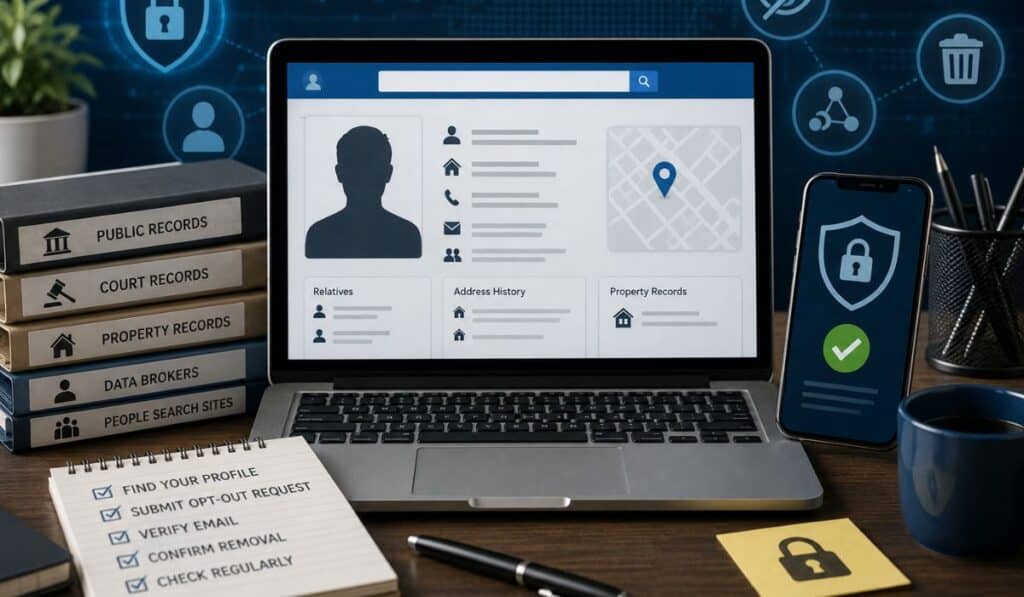
Users usually need to:
- Find their profile
- Submit a removal request
- Verify identity
- Wait for processing
Monitor Data Broker Listings
Information may reappear after removal if databases update again.
Regular monitoring is important.
Use Privacy Laws
Some states provide consumers with rights to request deletion or opt out of data sales.
California residents, for example, may have additional protections under the California Consumer Privacy Act.
Best Ways To Protect Your Online Privacy
Limit Public Sharing
Avoid posting unnecessary personal information online.
Review Privacy Settings
Social media privacy settings should be reviewed regularly.
Remove Unused Accounts
Inactive accounts may still contain personal data.
Monitor Public Records
Search your name periodically to understand what information appears online.
Use Identity Monitoring Services
Identity monitoring tools can alert users about suspicious activity or new database entries.
Are Data Brokers Legal?
Data brokers generally operate legally in the United States when collecting publicly available information or commercially permitted consumer data.
However, privacy regulations continue evolving.
State Privacy Laws
Several states now enforce consumer privacy laws that regulate certain forms of data collection and sales.
Public Records Laws
Government transparency laws continue allowing public access to many official records.
Ongoing Regulatory Changes
Lawmakers continue debating additional restrictions involving online tracking, consumer consent, and commercial data sales.
Conclusion
Understanding how data brokers collect information from public records helps explain why so much personal information appears online today. Public records systems, advertising technology, online tracking tools, and commercial databases all contribute to the growth of people search websites and consumer data platforms.
Information such as addresses, phone numbers, relatives, court filings, and property ownership details can quickly spread across multiple online records databases. While much of this activity operates legally under current public records laws, it also raises important concerns about privacy, identity theft, and digital exposure.
Consumers who want greater control over their online information should regularly monitor people search websites, review privacy settings, submit opt-out requests, and stay informed about changing privacy laws in the United States.

I am Sandy Saga, the writer and content researcher behind FamilyTreeNow.net. I create clear, easy-to-understand informational content related to family history, people search resources, genealogy topics, and public information awareness. My goal is to help readers understand how online search tools and family research resources work in a simple and responsible way.
The content on FamilyTreeNow.net is published strictly for informational and educational purposes only. I focus on providing accurate, transparent, and reader-friendly information to help users explore and learn. This website does not offer official records, legal advice, or professional services — it exists solely as an independent informational resource.