
A few years ago, searching your name online might have brought up a LinkedIn profile or an old social media account. Today, it’s a different story.
Type your name into a search engine, and you may find your home address, phone number, relatives, age, and even past residences—laid out neatly on people search websites. For many Americans, the first reaction is confusion. The second is discomfort.
How did this information get there?
More importantly—where is this heading?
The future of online privacy in the United States isn’t about whether your data is online. That question has already been answered. The real question is how exposed, searchable, and permanent that data will become in the coming years—and what control, if any, you’ll have over it.
What Online Privacy Really Means Today
Online privacy is often misunderstood. Many assume it refers to keeping personal data completely hidden. In reality, it’s about control—who can access your information, how easily, and for what purpose.
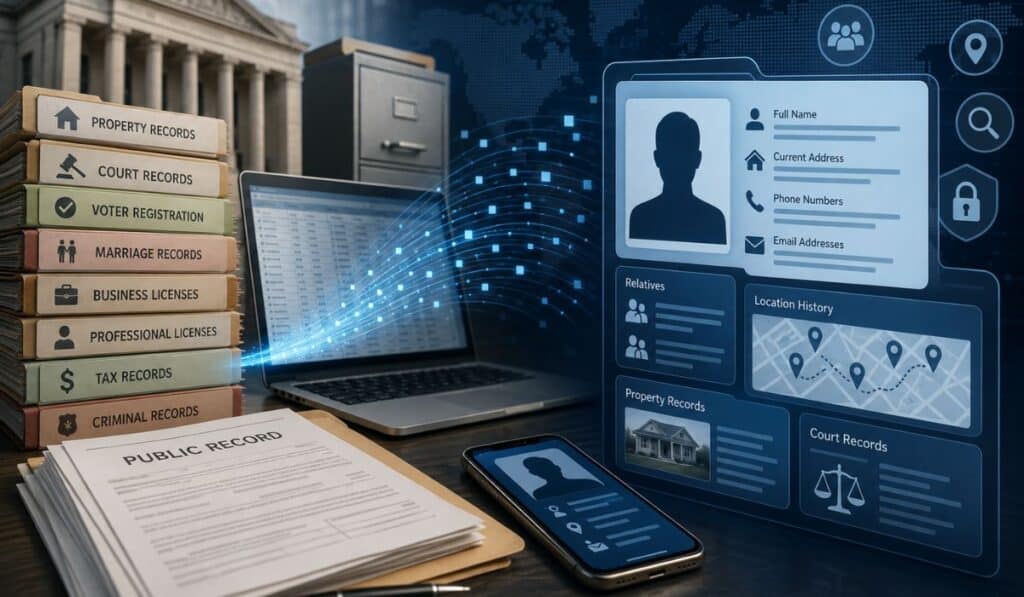
In the U.S., a significant portion of personal data is not considered private in the traditional sense. It falls under public records, meaning it can legally be accessed, collected, and redistributed.
This includes:
- Property ownership records
- Court filings
- Marriage and divorce records
- Voter registration data
What has changed is not the availability of this data—but its accessibility.
Previously, accessing such records required time, effort, and physical visits to government offices. Today, data brokers and people search platforms aggregate this information and present it in seconds.
That shift—from effort-based access to instant access—is what defines modern privacy challenges.
How Your Data Ends Up Online
Public Records System in the U.S.
Government agencies maintain vast databases of citizen information. These records are legally public, created for transparency and administrative purposes.
However, once digitized, they become easy to collect and redistribute.
Data Brokers Explained
Data brokers operate behind the scenes, compiling information from multiple sources:
- Public records
- Online activity
- Purchase history
- Third-party databases
They package this data into detailed profiles and sell it to:
- Marketing companies
- Financial institutions
- Background check services
- People search platforms
This ecosystem runs continuously, updating and refining profiles without direct user interaction.
People Search Websites
People search websites act as the front-end of this data ecosystem.
They gather data from brokers and public sources, then organize it into searchable profiles. Users can often find:
- Full names and aliases
- Phone numbers
- Addresses (past and present)
- Known relatives
These platforms operate legally because they rely on publicly available or legally acquired data.
The Rise of Data Brokers in America
The data broker industry has evolved into a sophisticated network.
Here’s a simplified flow:
Transaction → Data Collection → Aggregation → Sale → Public Display
For example:
- A retail purchase may be logged
- That data is shared with an aggregator
- It is combined with address and demographic data
- Sold to a broker
- Eventually appears on a people search site
This system is profitable because data is:
- Scalable
- Reusable
- Constantly updated
The more accurate and detailed a profile becomes, the more valuable it is.
Is This Legal? U.S. Privacy Laws Explained
Unlike some regions, the United States does not have a single, unified privacy law.
Federal Level
There are sector-specific laws:
- Health data (HIPAA)
- Financial data (GLBA)
But no comprehensive regulation covering all personal data.
State-Level Laws
Some states have introduced stricter privacy frameworks, including:
- California Consumer Privacy Act
- California Privacy Rights Act
These laws give residents rights such as:
- Requesting access to their data
- Requesting deletion
- Opting out of data sales
However, these protections are not uniform across all states, creating a fragmented regulatory environment.
The Problem With “Public Records”
The concept of public records was never designed for global, instant access.
Today, that same data can be:
- Indexed by search engines
- Aggregated across platforms
- Accessed by anyone, anywhere
This creates real-world risks:
- Identity theft
- Stalking or harassment
- Unwanted exposure of personal history
Consider a job applicant whose outdated address or legal record appears in a search. Even if irrelevant, it may influence perception.
The issue is no longer access—it’s context and scale.
Future Trends Shaping Online Privacy
AI and Data Profiling
Artificial intelligence is transforming how data is interpreted.
Instead of static profiles, systems can now:
- Predict behavior
- Analyze patterns
- Infer personal traits
This moves privacy concerns from “what is known” to “what can be predicted.”
Facial Recognition Expansion
Facial recognition technology is becoming more widespread across:
- Public surveillance systems
- Private platforms
- Retail environments
This adds a biometric layer to identity tracking, making anonymity increasingly difficult.
Decentralized Identity Systems
Emerging technologies, including blockchain-based identity systems, aim to give users more control.
These systems propose:
- Self-managed identity credentials
- Selective data sharing
- Reduced reliance on centralized databases
While promising, adoption remains in early stages.
Data Ownership Movement
Consumers are becoming more aware of how their data is used.
Future expectations may include:
- Explicit consent requirements
- Compensation for data usage
- Greater transparency from platforms
The Future of People Search Websites
People search platforms are likely to face increasing scrutiny.
Possible developments include:
- Mandatory opt-out systems
- Stronger verification requirements
- Regulatory oversight
However, they also serve legitimate purposes:
- Reconnecting families
- Background research
- Public information access
The future will likely involve balancing these benefits with stronger privacy protections.
How to Protect Your Personal Information
While the system may seem complex, individuals still have actionable options.
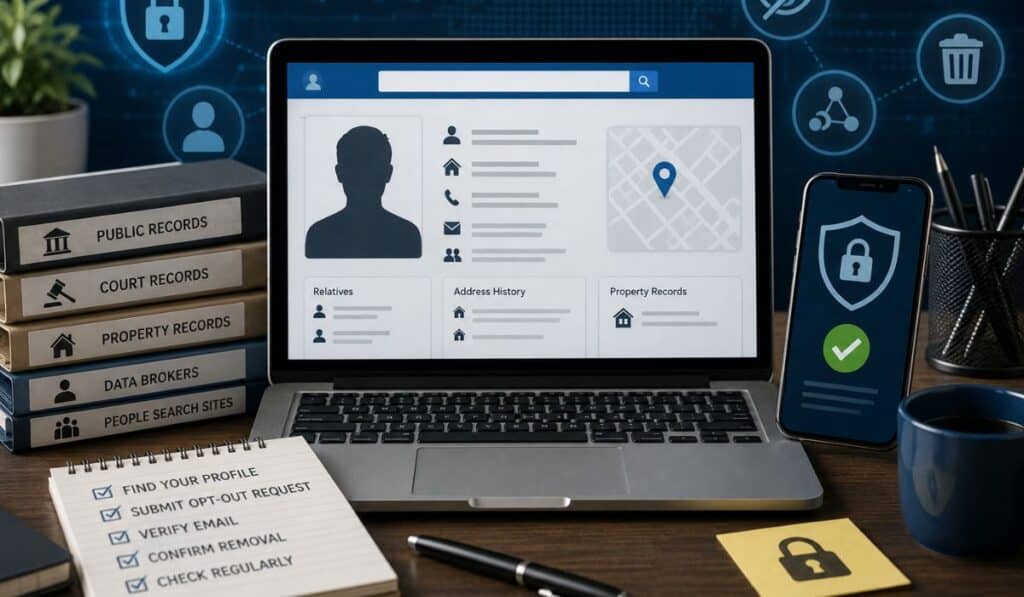
1. Opt Out of People Search Websites
Most platforms provide opt-out processes. These require:
- Identity verification
- Manual request submission
Though time-consuming, this reduces visibility.
2. Limit Data Sharing
- Avoid oversharing on public platforms
- Review privacy settings regularly
- Be cautious with online forms and registrations
3. Use Privacy Tools
- Data removal services
- Virtual phone numbers
- Secure email providers
4. Monitor Your Digital Presence
Search your name periodically and review:
- What information is visible
- Which platforms list your data
What Businesses Must Prepare For
Organizations dealing with personal data must adapt to:
- Increasing regulatory requirements
- Consumer demand for transparency
- Data security expectations
Privacy is shifting from compliance to competitive advantage.
Companies that prioritize user trust may gain long-term credibility.
Ethical Debate: Privacy vs Transparency
There is an ongoing tension between:
- The right to access information
- The right to remain private
Public records support transparency, accountability, and research. However, unrestricted aggregation can lead to misuse.
The challenge lies in defining where accessibility becomes overexposure.
Frequently Asked Questions
1. Is my personal information public record in the USA?
Some information, such as property records and court filings, is public. However, not all personal data is publicly accessible.
2. Can I remove my data from people search websites?
Yes, most platforms offer opt-out options, though the process may vary.
3. Are data brokers legal in the U.S.?
Yes, data brokers operate legally, though they are increasingly regulated at the state level.
4. How do people search websites get my information?
They collect data from public records, third-party databases, and data brokers.
Conclusion: Control Is the New Privacy
The future of online privacy in the United States is not about disappearing from the internet. That is no longer realistic.
Instead, it’s about understanding how your data moves, where it appears, and how you can manage it.
As technology advances, the gap between data collection and personal awareness continues to grow. Closing that gap requires both systemic change and individual action.
Your information is already part of the digital ecosystem. The real advantage lies in knowing how it works—and taking steps to stay in control.
Take a moment to search your name online.
Review what appears. Identify what you can control.
Because in the current landscape, awareness is not optional—it’s essential.

I am Sandy Saga, the writer and content researcher behind FamilyTreeNow.net. I create clear, easy-to-understand informational content related to family history, people search resources, genealogy topics, and public information awareness. My goal is to help readers understand how online search tools and family research resources work in a simple and responsible way.
The content on FamilyTreeNow.net is published strictly for informational and educational purposes only. I focus on providing accurate, transparent, and reader-friendly information to help users explore and learn. This website does not offer official records, legal advice, or professional services — it exists solely as an independent informational resource.