You open your inbox and notice a message from an unfamiliar address. The tone feels urgent—maybe it’s a freelance opportunity, a business proposal, or even someone claiming they know you. At first glance, it looks legitimate. But something feels off. Is it a real person, or just another scam attempt hiding behind a polished email?
Situations like this are increasingly common across the United States, where email remains a primary communication channel for work, networking, and online relationships. From freelancers vetting new clients to individuals verifying dating profiles, knowing who’s behind an email address has become a practical necessity—not just curiosity.
The risks are real. Phishing attacks, identity fraud, and fake personas can lead to financial loss or personal exposure. A single wrong click or misplaced trust can create serious consequences.
This is where reverse email lookup tools come in. They help uncover the identity, background, and digital footprint linked to an email address. In this guide, you’ll find the most reliable platforms available in the U.S., how they compare, and how to choose the right one based on your needs.
What is Reverse Email Lookup?
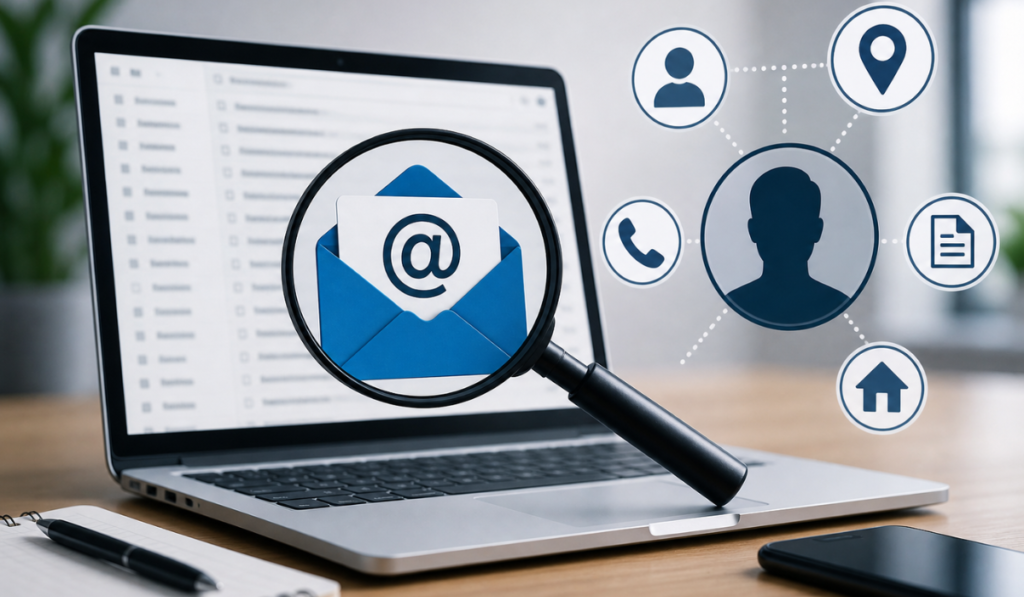
Reverse email lookup is a process used to identify the person or entity behind an email address. Instead of searching for someone by name or phone number, you start with the email itself and trace it back to its owner using various data sources.
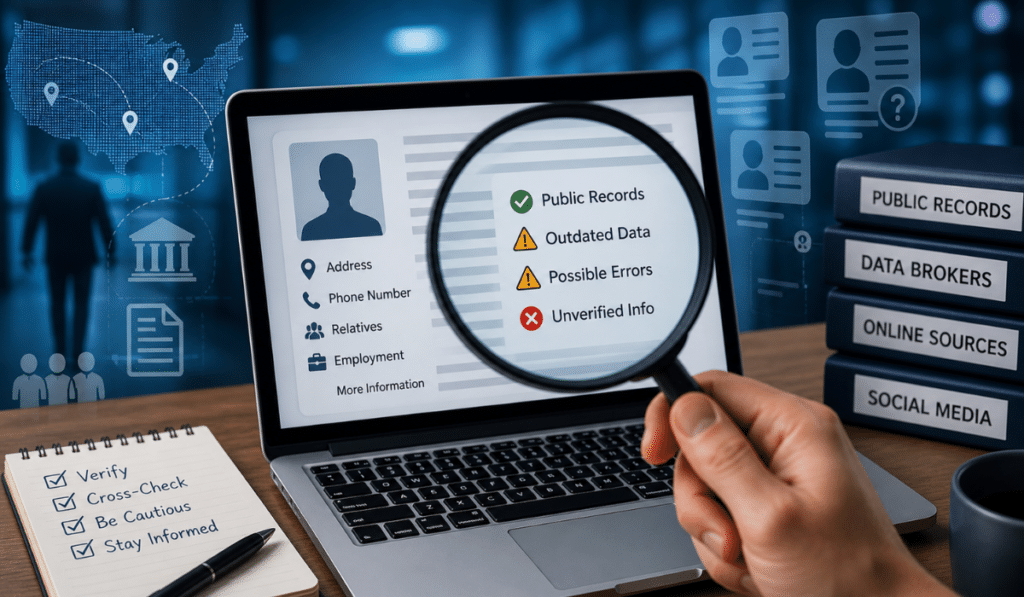
These tools work by scanning multiple layers of publicly available and aggregated information. This often includes public records, social media profiles, business listings, and historical data collected by data brokers. By connecting these data points, a lookup service can reveal details such as the owner’s name, location, associated phone numbers, and sometimes even social accounts.
Not all tools operate at the same level. Free lookup services typically provide surface-level insights—basic matches like a name, approximate location, or linked profiles if the email is publicly indexed. They’re useful for quick checks but often lack depth and consistency.
Paid platforms, on the other hand, access broader datasets and proprietary databases. These services can generate more comprehensive reports, sometimes including address history, relatives, employment data, and online activity patterns. This level of detail is closer to a lightweight background check.
It’s important to understand the distinction between a simple lookup and a deep report. A basic search answers “Does this email belong to a real person?” A more advanced service answers “Who is this person, and can they be trusted?” Choosing between the two depends on how critical the situation is and how much verification you need.
When Should You Use Email Lookup?
Reverse email lookup becomes relevant whenever trust is uncertain and verification matters. In the U.S., where much of communication happens online, these situations come up more often than people expect.
One of the most common scenarios is online dating. You match with someone, conversations seem genuine, but the email they share doesn’t align with their story. A quick lookup can confirm whether their identity matches their claims or if the account is tied to multiple suspicious profiles.
Freelancers and remote workers face a similar challenge. Imagine receiving a high-paying project offer from a new client. Before investing time—or worse, sharing sensitive information—it makes sense to verify whether the email is linked to a legitimate business or an impersonator.
Scam detection is another major use case. Emails claiming to be from banks, government agencies, or well-known companies can appear convincing. Checking the sender’s email can help expose inconsistencies or confirm whether it’s part of a known scam pattern.
There are also more neutral or personal uses. For example, you might be trying to reconnect with someone from your past but only have an old email address. A lookup tool can help you locate updated contact details or associated profiles.
In each of these cases, the goal isn’t just curiosity—it’s reducing uncertainty before making a decision.
How We Selected These Tools
Not every reverse email lookup service delivers reliable results, so selection requires clear evaluation criteria. For this guide, each platform was assessed based on factors that directly impact real-world usability.
Accuracy was the primary benchmark. Tools were tested for how consistently they matched email addresses with correct identities and whether the results aligned with verifiable data. Services that returned vague or outdated information were excluded.
Data sources also played a critical role. Preference was given to platforms that aggregate information from multiple channels—public records, social networks, and proprietary databases—rather than relying on a single dataset.
Pricing structure was evaluated in terms of transparency and value. Some tools appear inexpensive upfront but require subscriptions or hidden fees to access full reports. These details were carefully reviewed.
Speed and usability were also considered. A tool that takes several minutes to return incomplete results isn’t practical for most users.
Finally, compliance with U.S. privacy standards, including frameworks like the California Consumer Privacy Act, was essential. Platforms that respect data regulations and provide ethical usage guidelines were prioritized, ensuring both effectiveness and responsible use.
10 Best Reverse Email Lookup Websites in USA
1. FamilyTreeNow
Overview
FamilyTreeNow is one of the few platforms that offers genuinely free access to identity-related data, making it an effective starting point for reverse email lookups. Originally designed for genealogy research, it aggregates public records, family connections, and historical data—often revealing more context than typical lookup tools.
Key Features
- Free access to public records
- Family and relative mapping
- Address history and age data
- No signup required
- Fast search results
Why it stands out
Unlike most competitors that restrict access behind paywalls, FamilyTreeNow allows users to run initial checks without cost. This makes it highly practical for quick identity verification before committing to a paid tool.
Pros
- Completely free to use
- No account required
- Strong for background context
- Clean and simple interface
Cons
- Limited direct email matching in some cases
- Data may not always be up-to-date
- Lacks deep investigative reports
Best for
- Quick identity checks
- Genealogy research
- Users who want a free starting point
Pricing
Free
2. BeenVerified
Overview
BeenVerified is a widely used people search engine that provides detailed reverse email lookup reports, combining social data, public records, and digital footprints.
Key Features
- Email owner identification
- Social media profile linking
- Criminal and background records
- Mobile app support
Why it stands out
Its reports are well-structured and easy to interpret, even for non-technical users. It balances depth and usability effectively.
Pros
- Comprehensive reports
- User-friendly interface
- Mobile accessibility
Cons
- Requires subscription
- Occasional outdated entries
Best for
- Deep background checks
- Verifying online identities
Pricing
Paid subscription (monthly plans)
3. Spokeo
Overview
Spokeo specializes in aggregating data from social media, marketing databases, and public records, offering a broad snapshot of an email’s digital footprint.
Key Features
- Social media aggregation
- Contact information mapping
- Lifestyle and demographic insights
Why it stands out
Spokeo excels at connecting email addresses to social profiles, which is useful for identity validation.
Pros
- Strong social media matching
- Fast results
- Affordable entry pricing
Cons
- Limited deep background data
- Some data inconsistencies
Best for
- Social identity verification
- Quick lookups
Pricing
Low-cost subscription + per-report options
4. TruthFinder
Overview
TruthFinder focuses on in-depth background reports, going beyond surface-level lookup data.
Key Features
- Deep web scanning
- Criminal records
- Address and employment history
Why it stands out
It digs into less accessible data sources, making it one of the most thorough tools available.
Pros
- Highly detailed reports
- Dark web monitoring features
- Strong data depth
Cons
- Higher pricing
- Slower report generation
Best for
- Serious investigations
- Risk assessment
Pricing
Premium subscription
5. PeopleLooker
Overview
PeopleLooker provides a balanced approach between affordability and data depth, making it a popular mid-range option.
Key Features
- Email and phone lookup
- Social media connections
- Public records search
Why it stands out
It offers good value for users who need more than basic results but don’t require enterprise-level detail.
Pros
- Affordable pricing
- Easy-to-read reports
- Multiple search options
Cons
- Limited advanced data
- Subscription required
Best for
- Everyday verification
- Budget-conscious users
Pricing
Monthly subscription
6. Intelius
Overview
Intelius is one of the older and more established data brokers in the U.S., offering structured background reports.
Key Features
- Identity verification
- Address history
- Criminal and civil records
Why it stands out
Its long-standing database provides reliable historical data.
Pros
- Established reputation
- Detailed reports
- Good data coverage
Cons
- Interface feels outdated
- Pricing can escalate
Best for
- Historical data checks
- Background verification
Pricing
Subscription-based
7. Instant Checkmate
Overview
Instant Checkmate is designed for deep identity verification, focusing on criminal records and personal history.
Key Features
- Criminal records search
- Social media analysis
- Address tracking
Why it stands out
It emphasizes security-related insights, making it suitable for higher-risk scenarios.
Pros
- Detailed criminal data
- Strong reporting structure
- Good for risk evaluation
Cons
- Expensive
- Not ideal for quick searches
Best for
- Safety checks
- Investigative use
Pricing
Premium subscription
8. Hunter.io
Overview
Hunter.io focuses on professional email identification, especially for business and B2B use cases.
Key Features
- Email verification
- Domain-based search
- Company email patterns
Why it stands out
Unlike traditional lookup tools, it specializes in corporate email validation rather than personal identity.
Pros
- Highly accurate for business emails
- Clean interface
- API access
Cons
- Limited personal data
- Not useful for general identity lookup
Best for
- Sales teams
- Recruiters
- B2B verification
Pricing
Freemium + paid plans
9. Pipl
Overview
Pipl is a powerful identity resolution tool often used by enterprises and investigators.
Key Features
- Advanced identity matching
- Global data coverage
- Fraud detection capabilities
Why it stands out
It uses advanced algorithms and large-scale datasets, offering high accuracy.
Pros
- Enterprise-grade accuracy
- Global reach
- Strong fraud detection
Cons
- Expensive
- Not beginner-friendly
Best for
- Investigators
- Businesses
Pricing
Custom enterprise pricing
10. Social Catfish
Overview
Social Catfish is tailored for detecting fake identities, especially in online relationships.
Key Features
- Reverse email lookup
- Image and username search
- Scam detection tools
Why it stands out
It’s specifically designed to uncover catfishing and online fraud.
Pros
- Strong scam detection
- Multi-search options
- User-friendly
Cons
- Paid access required
- Some results need verification
Best for
- Dating verification
- Scam detection
Pricing
Subscription-based
Comparison Table (Quick Overview)
| Tool | Best For | Pricing | Data Depth | Free Option |
|---|---|---|---|---|
| FamilyTreeNow | Free identity lookup | Free | Medium | Yes |
| BeenVerified | Full background checks | Monthly subscription | High | No |
| Spokeo | Social profile linking | Low-cost plans | Medium | Limited |
| TruthFinder | Deep investigations | Premium subscription | Very High | No |
| PeopleLooker | Budget-friendly checks | Monthly subscription | Medium | No |
| Intelius | Historical data | Subscription | High | No |
| Instant Checkmate | Criminal record lookup | Premium | High | No |
| Hunter.io | Business email verification | Freemium | Low (personal) | Yes |
| Pipl | Enterprise identity search | Custom pricing | Very High | No |
| Social Catfish | Scam detection | Subscription | High | No |
Free vs Paid Email Lookup Tools
Free and paid reverse email lookup tools serve different purposes, and choosing the right type depends on how much detail you actually need.
Free tools are best suited for quick checks. They typically pull limited information from publicly indexed sources—such as basic name matches, approximate location, or a linked social profile if the email has been used publicly. Platforms like FamilyTreeNow fall into this category, offering a fast way to validate whether an email is connected to a real person. However, results can be incomplete, and in some cases, you may not get a match at all.
Paid tools operate differently. Services like BeenVerified or TruthFinder aggregate data from multiple databases, including public records, proprietary datasets, and historical archives. This allows them to generate detailed identity reports—often including address history, phone numbers, relatives, and sometimes even criminal records.
The decision comes down to risk level. If you’re verifying a casual contact or filtering obvious spam, a free lookup is usually sufficient. But if the situation involves financial decisions, personal safety, or long-term interaction, a paid service provides a deeper level of verification that justifies the cost.
Accuracy & Limitations
Reverse email lookup tools are useful, but they are not infallible. The biggest limitation is that not every email address leaves a traceable digital footprint.
Some emails—especially those created for temporary use—are intentionally designed to remain anonymous. Burner email services and encrypted providers often avoid linking user data to public records, making identification difficult or impossible. In these cases, even premium tools may return minimal or no results.
Another factor is data fragmentation. In the United States, personal data is not stored in a single unified system. Instead, it’s scattered across multiple public and private databases. This means a lookup tool may only access part of the picture, depending on its data sources. As a result, information can sometimes appear outdated, incomplete, or inconsistent.
Accuracy also depends on how often databases are updated. Some platforms refresh data regularly, while others rely on older snapshots.
For these reasons, cross-verification is critical. Instead of relying on a single result, compare findings across multiple tools and sources. If several platforms point to the same identity, the likelihood of accuracy increases significantly. Treat email lookup as a starting point for verification—not the final answer.
Legal & Privacy Considerations in USA
Using reverse email lookup tools in the United States is generally legal, but how you use the information matters.
One of the key regulations is the California Consumer Privacy Act, which gives individuals more control over how their personal data is collected and shared. Many lookup platforms align with this law by allowing users to opt out of databases or request data removal.
Another important framework is the Fair Credit Reporting Act. This law restricts how personal data can be used in decisions related to employment, credit, housing, or insurance. Most email lookup services clearly state that they are not FCRA-compliant, meaning their data cannot legally be used for official background checks in these contexts.
From a legal standpoint, casual use—such as verifying an email sender or checking for scams—is acceptable. However, using these tools to harass, stalk, discriminate, or make formal decisions about someone can cross legal boundaries.
Ethical use is just as important. Even when data is publicly available, it should be handled responsibly. Avoid misusing personal information or drawing conclusions without proper context. Reverse lookup tools are meant to reduce uncertainty, not invade privacy or replace due diligence.
Tips to Get Better Results
To get reliable results from reverse email lookup, a single search is rarely enough. The most effective approach is layered verification.
Start by using more than one tool. Different platforms rely on different datasets, so running the same email through multiple services increases your chances of finding consistent matches. For example, you might begin with FamilyTreeNow for a quick scan, then validate findings using a more detailed service.
Next, combine lookup results with a manual search. Enter the email address directly into Google Search and check if it appears on websites, forums, or public profiles. This often reveals context that automated tools miss.
Social media is another valuable layer. Many users link their email addresses to platforms like LinkedIn or other networks, which can help confirm identity and professional background.
Finally, focus on consistency. If the same name, location, or profile appears across multiple sources, it’s a strong indicator of accuracy. Conflicting data, on the other hand, should be treated with caution.
Alternatives to Email Lookup
If reverse email lookup doesn’t produce useful results, there are other methods to identify someone online.
One common option is reverse phone lookup. If you have access to a phone number linked to the same contact, it can often provide clearer identification through telecom and public records databases.
Username searches are another effective approach. Many people reuse the same username across multiple platforms. Searching that handle across forums, social networks, and websites can reveal a broader digital footprint than an email alone.
Social media investigation is often the most direct method. Platforms like Facebook or Instagram allow you to search profiles manually, sometimes uncovering connections that automated tools miss.
In practice, combining these methods tends to produce the best results. If email lookup provides limited data, switching to phone, username, or social-based searches can fill in the gaps and give you a more complete picture.
Conclusion
Reverse email lookup has become a practical tool for navigating online interactions more safely. Whether you’re dealing with an unknown sender, evaluating a potential client, or verifying someone’s identity, having access to the right information can prevent costly mistakes.
The key is choosing the right tool for your situation. If you need a quick and free starting point, FamilyTreeNow offers a straightforward way to check basic details. For more complex scenarios that require deeper verification, platforms like TruthFinder and BeenVerified provide more comprehensive insights.
No single tool is perfect, which is why combining multiple sources often leads to better results. Treat these tools as part of a broader verification process rather than a standalone solution.
If there’s any doubt about an email, take a moment to investigate. A quick lookup can provide clarity—and in many cases, help you avoid unnecessary risk.
FAQs
- Can I find someone’s name from an email address?
Yes, in many cases you can. Reverse email lookup tools scan public records, social profiles, and aggregated data to match an email with a real identity. However, success depends on whether the email has been used publicly. Private or newly created emails may not return results. - Is reverse email lookup legal in the USA?
Yes, it is legal for general use such as identifying unknown senders or preventing scams. However, under laws like the Fair Credit Reporting Act, you cannot use these tools for official decisions like hiring or tenant screening unless the service is specifically compliant. - Are free email lookup tools reliable?
Free tools can be useful for initial checks but are often limited in scope. They may provide basic identity matches but lack depth. For higher accuracy and detailed reports, paid services usually perform better. - How accurate are these tools?
Accuracy varies depending on the platform and data sources. Tools that aggregate multiple databases tend to provide more reliable results. That said, no service guarantees 100% accuracy, so cross-checking information is always recommended. - Can I track Gmail users?
Tracking a Gmail user directly is not possible through standard lookup tools, especially if the account is private and not linked to public data. However, if the email has been used on websites or social platforms, it may still leave traceable information that lookup services can access.

I am Sandy Saga, the writer and content researcher behind FamilyTreeNow.net. I create clear, easy-to-understand informational content related to family history, people search resources, genealogy topics, and public information awareness. My goal is to help readers understand how online search tools and family research resources work in a simple and responsible way.
The content on FamilyTreeNow.net is published strictly for informational and educational purposes only. I focus on providing accurate, transparent, and reader-friendly information to help users explore and learn. This website does not offer official records, legal advice, or professional services — it exists solely as an independent informational resource.