Finding information about people has become easier than ever. Millions of Americans now use online people search websites to reconnect with old friends, verify identities, check unknown callers, research neighbors, or access publicly available records. What once required physical phone books or courthouse visits can now be done within seconds through modern people finder platforms.
The growing popularity of public records websites in the United States has created a massive industry around online identity searches and reverse lookup services. Whether someone wants to confirm the legitimacy of a phone number, locate a long-lost relative, or view publicly accessible address records, people search engines have become one of the most commonly used online tools.
Among the many platforms available today, White Pages and FamilyTreeNow are two names that frequently appear in discussions about public data searches. Both services provide access to information gathered from public records, but they operate differently and serve different types of users. White Pages is widely recognized for its reverse phone lookup services and identity verification tools, while FamilyTreeNow became popular for offering free access to family-related public data and address history information.
Although both websites help users search for people online, there are major differences in pricing, data depth, search accuracy, privacy concerns, and overall usability. Some users prefer White Pages for professional-level searches and cleaner reports, while others use FamilyTreeNow because of its free access and genealogy-style records.
In this guide, we will compare White Pages vs FamilyTreeNow in detail. You will learn how these platforms work, what types of information they provide, their strengths and weaknesses, privacy implications, and which website may be better depending on your needs. By the end of this comparison, readers will have a clear understanding of how both people search platforms perform in the modern public records industry.
What Are People Search Websites?
People search websites are online platforms designed to help users find publicly available information about individuals. These websites collect, organize, and display data from multiple public and semi-public sources, allowing users to search for names, phone numbers, addresses, relatives, and other background details through a centralized system.
In the United States, people search engines have become increasingly popular because public records are widely accessible under federal and state transparency laws. Instead of manually searching government databases or local records offices, users can access aggregated information within seconds using modern people finder tools.
Most people search platforms gather data from several different sources, including:
- Property ownership records
- Court filings and legal records
- Phone directories
- Voter registration databases
- Business registrations
- Social media references
- Address history databases
- Marketing and consumer data providers
This process is known as public data aggregation. The platforms continuously collect and update information from various databases to create searchable profiles connected to individuals.
However, it is important to understand that not all people search services operate in the same way. Some websites focus only on public record searches, while others provide more advanced background check services.
A public record search platform mainly displays openly available information such as addresses, phone numbers, relatives, and age details. Background check services may include additional reports such as criminal records, employment history, or financial data depending on legal limitations.
There is also a major distinction between people search websites and consumer reporting agencies. Consumer reporting agencies are regulated under the Fair Credit Reporting Act (FCRA) and can legally provide reports for employment, tenant screening, or credit-related decisions. Most people search websites, including White Pages and FamilyTreeNow, are not intended for official employment or housing screening purposes.
Because of their convenience and accessibility, online people search engines continue to grow in popularity among Americans looking for quick access to public information.
Overview of White Pages
Whitepages is one of the oldest and most recognized names in the online people search industry. Originally known for its printed telephone directories, the company evolved from traditional paper phone books into a large digital platform offering reverse lookup services, contact searches, and identity verification tools for modern users.
For decades, printed White Pages directories were commonly used across American households to locate phone numbers and addresses. As internet usage increased and physical phone books became less relevant, the platform transitioned into an online database capable of providing instant search results for millions of individuals and businesses throughout the United States.
Today, White Pages operates as a comprehensive phone lookup tool and public records platform. Users can search by name, phone number, or address to access various types of information connected to an individual. The platform is especially known for its reverse phone lookup capabilities, which help users identify unknown callers, telemarketers, spam calls, and suspicious phone numbers.
Some of the primary services offered by White Pages include:
- Reverse phone lookup
- Address lookup
- Name-based people searches
- Background reports
- Identity verification tools
- Scam and spam call detection
- Contact information searches
One reason White Pages remains popular is its strong reputation for delivering relatively organized and easy-to-read reports. The platform focuses heavily on usability and mobile accessibility, making it convenient for users searching from smartphones or tablets.
White Pages also offers premium subscription plans that unlock additional data and deeper reports. Free users can usually access basic contact information, while paid plans may include criminal records, property details, relatives, and historical address information. The company markets some of its premium services as an identity verification platform for consumers looking to validate unknown contacts or reduce fraud risks.
Another major strength of White Pages is its mobile app, which integrates caller identification and spam call protection features. This functionality has helped the platform remain relevant in an era dominated by robocalls and phone scams.
Despite its popularity, White Pages has also faced criticism regarding pricing transparency and paywalled information. Some users feel that advanced reports require costly subscriptions compared to newer competitors offering partially free services. Even so, White Pages continues to hold a strong reputation in the United States as one of the most trusted people search and reverse lookup platforms available online.
Overview of FamilyTreeNow
FamilyTreeNow gained widespread attention as a free people search website that allows users to access public records, family connections, and address history information without requiring paid subscriptions for many searches. Unlike traditional background check platforms, FamilyTreeNow focuses heavily on genealogy-style data and family relationship mapping.
The platform became especially popular because it offered free access to information that many competing websites placed behind paywalls. Users could search individuals by name and instantly view possible relatives, current and previous addresses, estimated age ranges, and associated phone numbers. This free access model attracted millions of users looking for quick people searches without purchasing premium memberships.
One of the main features that differentiates FamilyTreeNow from other people search websites is its family-oriented structure. Instead of focusing only on identity verification or reverse phone lookups, the platform attempts to show connections between individuals and family members through publicly available records.
Some of the commonly available features on FamilyTreeNow include:
- Address history records
- Possible relatives and family members
- Age and birth year estimates
- Phone number listings
- Public genealogy-style information
- Associated individuals and households
- Name-based people searches
The platform’s interface is relatively straightforward, although some users consider it less polished compared to premium competitors. Since the website prioritizes free access over subscription-driven design, search results may occasionally appear cluttered or outdated depending on the available public data sources.
FamilyTreeNow also became controversial because of concerns related to data transparency and online privacy. Critics argued that the platform made personal information too easy to access, especially when users discovered their addresses, relatives, or historical records publicly searchable online. As a result, many people began searching for opt-out methods to remove their data from the website.
Despite these concerns, FamilyTreeNow remains one of the most widely discussed free people search platforms in the United States. Its ability to display broad family connections and historical address data makes it appealing for genealogy research, reconnecting with relatives, and general public record exploration.
Many users compare FamilyTreeNow with White Pages because both platforms provide public record search capabilities, but their core purposes differ significantly. White Pages emphasizes professional-style contact verification and reverse phone lookup tools, while FamilyTreeNow focuses more on free family-related public data discovery. This difference in approach is one of the biggest reasons why both platforms attract different types of users.
White Pages vs FamilyTreeNow: Feature Comparison
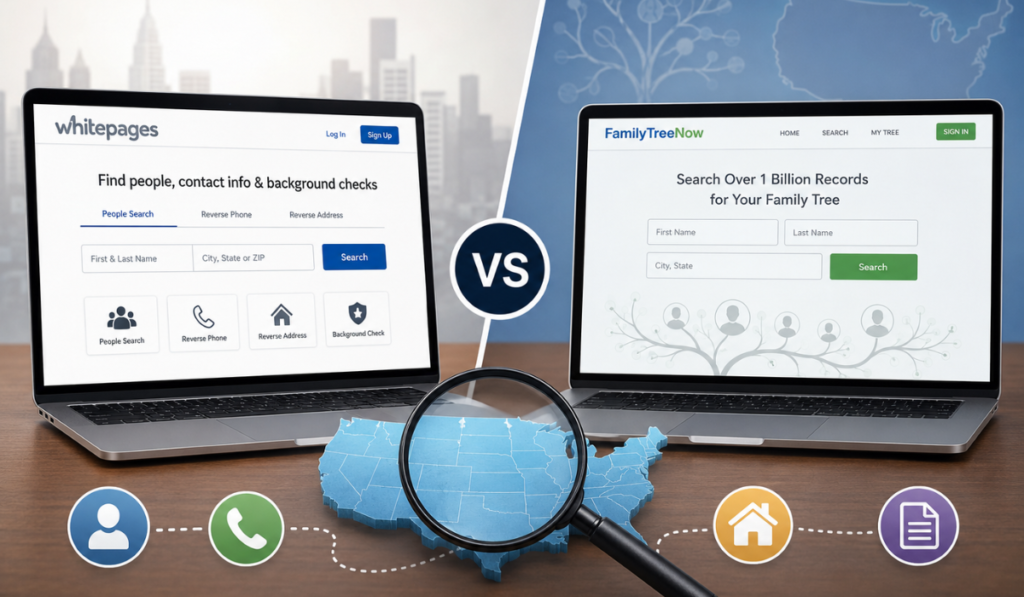
When comparing White Pages and FamilyTreeNow, it becomes clear that both platforms target different audiences despite operating within the same people search industry. One focuses more on professional identity verification and reverse phone lookup services, while the other prioritizes free access to family-related public records and address history data.
Below is a detailed comparison of the most important features users consider before choosing a people search platform.
A. Search Accuracy
Search accuracy is one of the biggest factors when evaluating any public records website. Both White Pages and FamilyTreeNow rely on aggregated public data, meaning the accuracy of results depends heavily on how frequently their databases are updated.
White Pages generally provides cleaner and more organized search results. Duplicate profiles are less common, and the platform tends to filter irrelevant matches more effectively. Reverse phone lookup searches are also usually more refined because the company invests heavily in caller identification systems.
FamilyTreeNow often provides broader search results, but some records may be outdated or duplicated. Since the platform emphasizes free public data access, users occasionally encounter older addresses or disconnected phone numbers that have not been recently updated.
For users seeking professional-level searches and cleaner reports, White Pages usually performs better in terms of usability and accuracy.
B. Pricing
One of the biggest differences between these platforms is pricing structure.
White Pages operates on a freemium model. Basic searches may provide limited details for free, but advanced reports typically require a subscription or one-time payment. Premium services often include deeper public records, background details, and identity verification tools.
FamilyTreeNow became popular primarily because many of its searches are available without mandatory subscriptions. Users can often access address history, family connections, and basic profile information for free.
However, completely free access can come with trade-offs such as:
- More advertisements
- Older data
- Limited filtering options
- Less refined reports
Users looking for advanced professional reports may prefer White Pages, while casual users often choose FamilyTreeNow because of its free accessibility.
C. Reverse Phone Lookup
Reverse phone lookup is an area where White Pages has a significant advantage.
The platform offers:
- Spam call identification
- Caller ID tools
- Unknown number verification
- Mobile and landline searches
Its mobile app further improves the experience by helping users detect telemarketers and scam callers in real time.
FamilyTreeNow includes phone-related data in some searches, but it is not primarily designed as a dedicated reverse phone lookup platform. Mobile number coverage may also be less consistent compared to White Pages.
Users mainly searching for unknown caller information generally find White Pages more effective.
D. User Interface
White Pages has a cleaner and more professional user interface. Navigation is simple, search filters are organized, and mobile usability is optimized for modern devices.
FamilyTreeNow uses a more basic design focused on delivering large amounts of free public data quickly. While functional, the interface can sometimes feel cluttered, especially when displaying multiple associated records and relatives.
For first-time users or mobile users, White Pages usually offers a smoother browsing experience.
E. Public Records Depth
Both platforms provide access to public records, but the depth and presentation differ.
White Pages focuses on:
- Identity verification
- Contact details
- Reverse phone records
- Address lookup
- Some background reports
FamilyTreeNow focuses more on:
- Family relationships
- Historical address data
- Household connections
- Public genealogy-style records
Users researching family history or possible relatives may find FamilyTreeNow more useful, while users performing contact verification may prefer White Pages.
F. Speed & Accessibility
White Pages delivers faster and more polished search performance overall. Results load quickly, and the platform is optimized for mobile users.
FamilyTreeNow remains accessible without requiring extensive account registration, which many users appreciate. However, advertisements and large record displays can occasionally slow the browsing experience.
Feature Comparison Table
| Feature | White Pages | FamilyTreeNow |
|---|---|---|
| Reverse Phone Lookup | Strong | Moderate |
| Free Access | Limited | Extensive |
| User Interface | Clean & Professional | Basic & Cluttered |
| Family Connections | Limited | Strong |
| Address History | Available | Extensive |
| Mobile App | Yes | No Major App Presence |
| Scam Call Detection | Yes | No |
| Background Reports | Premium Feature | Limited |
| Registration Requirement | Sometimes | Minimal |
| Best Use Case | Identity Verification | Free Public Searches |
Data Accuracy and Reliability
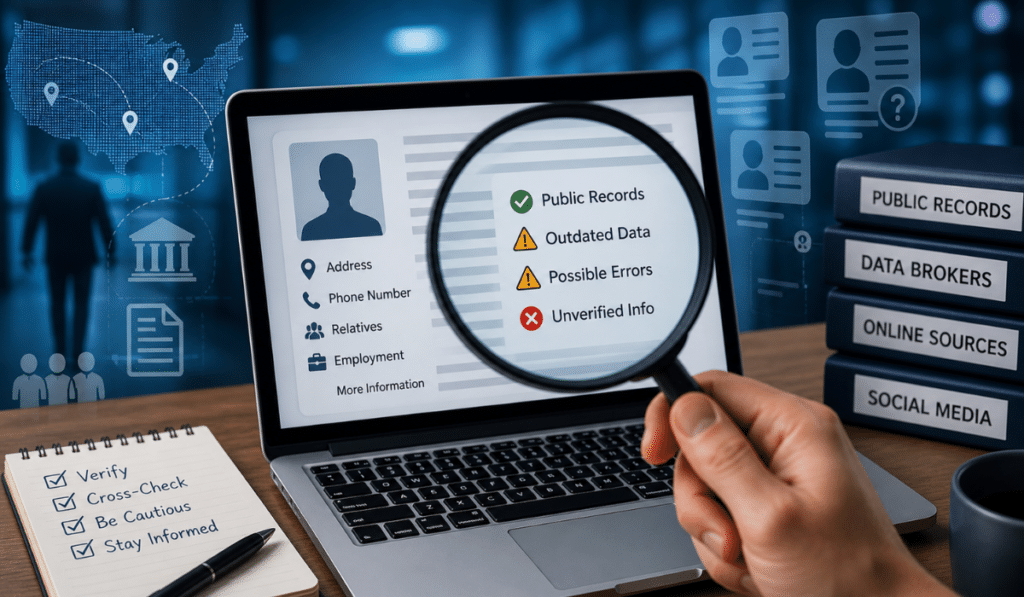
One of the most important things users should understand about people search websites is that no platform provides perfectly accurate or permanently updated information. Websites like Whitepages and FamilyTreeNow rely heavily on public record aggregation, which means their databases are constantly pulling information from multiple third-party and government-related sources. Because of this process, inaccuracies and outdated information can sometimes appear in search results.
Public records themselves are not always updated in real time. County databases, property records, court filings, voter registrations, and phone directories may take weeks or even months to reflect changes. If a person recently moved to a new address, changed a phone number, or updated legal records, older information may still appear online temporarily.
Outdated address history is one of the most common issues users encounter on people search platforms. Some records may display previous residences from many years ago, especially on websites that prioritize broad historical data collection. Duplicate identities are another frequent problem. Individuals with common names may appear multiple times across different databases, leading to incomplete or confusing profiles.
When comparing the two platforms, FamilyTreeNow generally provides broader data visibility, especially for family relationships, associated individuals, and historical addresses. The platform tends to expose more interconnected records, which can be useful for genealogy-style searches and family tracing.
White Pages, however, usually delivers cleaner and more organized results. Its interface is designed to simplify search experiences and reduce confusion caused by duplicate entries. Users often find White Pages easier to navigate, particularly when performing reverse phone lookups or identity verification searches.
Despite these differences, users should remember that people search websites are informational tools rather than guaranteed verification systems. Sensitive information should never be accepted blindly without additional confirmation.
Users Should Independently Verify Sensitive Information
Whether using White Pages or FamilyTreeNow, users should independently verify important details before making personal, financial, legal, or professional decisions. Public databases can contain outdated records, incomplete information, or mistaken identity matches. Cross-checking information through official sources remains essential when accuracy truly matters.
Privacy Concerns and Legal Issues
Privacy concerns remain one of the biggest debates surrounding online people search websites in the United States. Platforms like White Pages and FamilyTreeNow collect publicly accessible information and organize it into searchable profiles, making it easier for users to locate personal details online. While this process is generally legal under US public records laws, it also raises important ethical and privacy-related questions.
Both White Pages and FamilyTreeNow operate legally because they primarily use information already available through public records and commercial data sources. In the United States, many records such as property ownership data, court filings, voter registrations, and certain phone listings are considered public information under state and federal transparency laws.
However, legality does not always eliminate privacy concerns.
Many users are surprised to discover how much information about them can appear online, including:
- Current and previous addresses
- Phone numbers
- Relatives and household connections
- Age estimates
- Property ownership history
FamilyTreeNow, in particular, received criticism because of the large amount of free information accessible without subscriptions. Critics argued that easy public access could increase risks related to stalking, harassment, identity theft, and online privacy violations.
White Pages has also faced concerns, although its platform generally limits deeper information behind paid services and identity verification systems.
Another important distinction is that most people search websites are not official consumer reporting agencies under the Fair Credit Reporting Act (FCRA). This means their data should not legally be used for employment screening, tenant evaluations, credit approval decisions, or other regulated purposes.
Opt-Out Requests and Data Removal
Most major people search platforms allow users to request removal of their information through opt-out procedures. These systems exist because many individuals prefer not to have personal data publicly searchable online.
The opt-out process usually involves:
- Searching for your profile
- Submitting a removal request
- Verifying identity ownership
- Waiting for database updates
Removal timelines vary depending on the platform and the source of the information.
How to Remove Your Information
Users who want additional privacy can visit the opt-out sections provided by White Pages or FamilyTreeNow and follow the official removal instructions. Some users also submit requests to multiple data broker websites to reduce their online visibility across the broader people search ecosystem.
It is important to understand that removing information from one website does not automatically erase it from the internet entirely. Since public data may exist across multiple databases, users often need to repeat the process on several platforms.
Ethical Use of Public Information
Even though people search websites are legal, users should approach them responsibly. Public records should never be used for harassment, intimidation, discrimination, or unlawful monitoring. Ethical use means respecting personal privacy while understanding that publicly accessible information still involves real individuals and families.
Which Platform Is Better for Different Users?
The better platform ultimately depends on what type of search experience a user wants. While both White Pages and FamilyTreeNow provide access to public records and people search tools, their strengths appeal to different audiences.
Some users prioritize clean reports and professional verification tools, while others simply want free access to family-related information and address history data.
Best for Casual Searches
For basic people searches, FamilyTreeNow is often the easier starting point because of its free accessibility. Users can quickly search names, relatives, and addresses without paying for subscriptions in many cases.
Casual users looking for:
- Old addresses
- Family member connections
- General public records
- Basic people searches
may find FamilyTreeNow sufficient for everyday use.
White Pages also works for casual searches, but many advanced details are locked behind premium plans.
Best for Reverse Phone Lookup
White Pages performs significantly better for reverse phone lookup searches.
The platform specializes in:
- Unknown caller identification
- Spam detection
- Phone number verification
- Caller reputation analysis
Its mobile app and scam call detection tools make it one of the strongest reverse phone lookup services in the US market.
FamilyTreeNow includes some phone-related records, but reverse lookup functionality is not its primary strength.
Best for Genealogy Research
FamilyTreeNow is generally more useful for genealogy-style research and family tracing.
The platform emphasizes:
- Possible relatives
- Household members
- Historical addresses
- Family connections
Users researching ancestry or reconnecting with distant relatives may appreciate the broader relationship mapping available on FamilyTreeNow.
Best for Professional Verification
White Pages is usually the stronger option for users seeking cleaner reports and professional-level search experiences.
Its organized interface, structured data presentation, and identity verification features make it more suitable for:
- Contact verification
- Business-related searches
- Fraud prevention
- Professional research
The platform also tends to reduce clutter and duplicate profile confusion more effectively.
Best Free Option
For users focused entirely on free access, FamilyTreeNow remains one of the most widely used choices.
However, free access comes with limitations such as:
- Older records
- More advertisements
- Less refined filtering
- Possible duplicate entries
White Pages offers stronger functionality overall, but many features require payment.
Users should decide whether they prioritize free access or cleaner, more advanced search capabilities.
Alternatives to White Pages and FamilyTreeNow
Although White Pages and FamilyTreeNow are two well-known people search platforms, several other websites compete in the same industry. Users searching for the best White Pages alternatives often compare multiple services based on pricing, data accuracy, reverse phone lookup quality, and public record depth.
Here are some of the most popular alternatives available in the United States.
TruePeopleSearch
TruePeopleSearch is widely recognized for offering free people search services with relatively detailed public record access. Many users prefer it because it combines phone lookup tools, address history, and possible relatives without requiring expensive subscriptions.
Spokeo
Spokeo focuses heavily on aggregated online identity information and social media connections. The platform is known for collecting data from online profiles, marketing databases, and public records to create broader digital identity reports.
BeenVerified
BeenVerified is more premium-focused and offers detailed background reports through paid memberships. Users often choose it for criminal record searches, reverse phone lookup tools, and deeper personal data analysis.
FastPeopleSearch
FastPeopleSearch became popular because of its free search model and relatively fast access to public records. It shares similarities with FamilyTreeNow by offering free name searches and address history details.
PeopleFinders
PeopleFinders has existed for many years and provides both basic public record searches and paid background reports. The platform is commonly used for identity verification and contact information searches.
Each platform has different strengths, and the best choice depends on whether users prioritize free access, cleaner reports, genealogy research, or professional verification tools.
Pros and Cons Breakdown
Choosing between White Pages and FamilyTreeNow depends largely on what type of information users need and how much they value usability, privacy, and search depth.
White Pages Pros
- Trusted and established brand in the US market
- Cleaner and more professional interface
- Strong reverse phone lookup functionality
- Scam call detection tools
- Better mobile usability
- Organized identity verification features
White Pages Cons
- Many advanced reports require payment
- Limited free search data
- Subscription pricing may feel expensive for casual users
- Some premium features locked behind paywalls
FamilyTreeNow Pros
- Extensive free access to public records
- Strong family relationship mapping
- Useful for genealogy-style searches
- Historical address visibility
- Minimal account requirements for searching
FamilyTreeNow Cons
- Outdated records may appear frequently
- Privacy criticism due to public accessibility
- Search results can feel cluttered
- Duplicate profiles occasionally create confusion
- Less polished interface compared to White Pages
Both platforms serve useful purposes, but users should choose based on whether they value free access or cleaner, more advanced reporting tools.
Final Verdict
When comparing White Pages and FamilyTreeNow, there is no single winner for every user. Both platforms serve different purposes within the growing people search and public records industry in the United States.
White Pages is generally the stronger choice for users seeking professional-level search tools, cleaner reports, and reliable reverse phone lookup functionality. Its organized interface, identity verification systems, and spam detection capabilities make it more suitable for users who prioritize accuracy, usability, and structured search experiences.
FamilyTreeNow, on the other hand, stands out because of its free accessibility and broad family-related public data. Users researching genealogy connections, historical addresses, or possible relatives often prefer FamilyTreeNow because it exposes a larger amount of interconnected public information without requiring expensive subscriptions.
For casual users performing occasional people searches, FamilyTreeNow may provide enough free information to meet their needs. For users focused on reverse phone lookups, professional verification, or more polished reporting systems, White Pages typically delivers a stronger overall experience.
Regardless of which platform users choose, responsible usage remains extremely important. Public record databases can contain outdated or incomplete information, and sensitive details should always be independently verified through official sources whenever accuracy matters.
Users should also respect privacy laws and ethical boundaries when accessing public information online. People search websites are informational tools, not systems for harassment, discrimination, or unlawful monitoring.
As online public records continue evolving, platforms like White Pages and FamilyTreeNow will likely remain major players in the digital people search industry.
For more detailed comparisons, privacy guides, reverse phone lookup tutorials, and public records insights, explore additional articles and resources available on your website.
Frequently Asked Questions (FAQs)
1. Is FamilyTreeNow really free?
FamilyTreeNow offers many free people search features, including address history, relatives, and basic public record information. However, some linked third-party services may require payment.
2. Is White Pages accurate?
White Pages is generally considered one of the more organized people search platforms, but no public records website guarantees perfect accuracy because databases update at different speeds.
3. Can I remove my information from FamilyTreeNow?
Yes. FamilyTreeNow provides an opt-out process that allows users to request removal of their information from public search results.
4. Is White Pages safe to use?
White Pages is widely used in the United States and is generally considered safe for informational searches and reverse phone lookups when used responsibly.
5. Which people search site is best in the USA?
The best platform depends on the user’s goals. White Pages is stronger for professional verification and phone lookups, while FamilyTreeNow is better for free public record searches and genealogy-style data.
6. Are people search websites legal?
Yes. Most people search websites operate legally by collecting publicly available information from records and databases permitted under US law.
7. What is the best alternative to White Pages?
Popular alternatives include TruePeopleSearch, Spokeo, BeenVerified, FastPeopleSearch, and PeopleFinders depending on the type of search functionality users need.

I am Sandy Saga, the writer and content researcher behind FamilyTreeNow.net. I create clear, easy-to-understand informational content related to family history, people search resources, genealogy topics, and public information awareness. My goal is to help readers understand how online search tools and family research resources work in a simple and responsible way.
The content on FamilyTreeNow.net is published strictly for informational and educational purposes only. I focus on providing accurate, transparent, and reader-friendly information to help users explore and learn. This website does not offer official records, legal advice, or professional services — it exists solely as an independent informational resource.