Researching family history can be exciting — but it can also be frustrating when multiple relatives share the same or very similar names. Many beginners run into genealogy name confusion when they discover several “John Smiths,” “Maria Gonzalezes,” or “Raj Patels” in the same family line. Without careful verification, it’s easy to attach the wrong records, create inaccurate family trees, or follow the wrong branch for months.
The good news is that you don’t need to be a professional genealogist to avoid these mistakes. By learning a clear process, using the right comparison points, and understanding how people search name matching works, you can identify relatives with similar names confidently and accurately.
This guide will walk you through practical, step-by-step methods to help you verify identities, reduce errors, and build a more reliable family history.
Why Relatives Often Have Similar Names
Before learning how to separate people with similar names, it helps to understand why this happens so often in family research.
Family Naming Traditions
In many cultures, children are named after parents, grandparents, or respected ancestors. This creates repeating names across generations, such as:
- Father and son with identical first and last names
- Grandchildren named after grandparents
- Cousins sharing traditional family names
When reviewing records, these repeating patterns can easily look like duplicates when they are actually different people.
Cultural and Regional Naming Patterns
Different cultures follow specific naming systems that increase similarity:
- Patronymic naming (based on father’s name)
- Common religious names reused across families
- Limited surname variety in certain regions
- Generational naming conventions
Understanding these traditions reduces assumptions and helps prevent genealogy name confusion.
Use of Suffixes and Variations
Names may appear with small variations:
- Jr., Sr., II, III
- Middle initials added or removed
- Nicknames instead of formal names
- Spelling differences over time
These details matter more than most beginners realize.
Common Problems When Researching Similar Names
Many mistakes happen because researchers rely too heavily on names alone. Here are the most common issues.
1. Confusing Parent and Child
A father and son may share the same name and even live in the same city. Without checking ages or timelines, records can become mixed.
Example:
- Michael Thompson (born 1948)
- Michael Thompson Jr. (born 1975)
If the suffix is missing in some documents, confusion is almost guaranteed.
2. Linking the Wrong Family Tree
Auto-generated people-search suggestions sometimes connect individuals based only on name similarity. This is useful but risky when not verified.
3. Assuming Location Equals Identity
Two people with the same name living nearby are not necessarily related — especially in large cities.
4. Duplicate Online Records
Different databases may create multiple profiles for the same person, or merge records incorrectly.
Recognizing these problems early will help you identify relatives with similar names more accurately.
Key Identifiers Beyond the Name
The most important rule in genealogy: Never rely on the name alone. Professionals compare multiple data points before confirming identity.
1. Birth and Death Dates
Dates are often the easiest way to separate individuals.
Check:
- Exact birth year
- Approximate age in census records
- Death records and obituaries
Even a difference of five years may indicate a different person.
2. Addresses and Locations
People tend to move throughout life, but addresses still reveal patterns.
Look for:
- Long-term home locations
- Neighborhood consistency
- Migration patterns
When two similar names live in different states at the same time, they are likely different individuals.
3. Marriage Records
Marriage information is extremely helpful because it introduces another verifying detail: the spouse.
Compare:
- Spouse name
- Marriage year
- Location of ceremony
Spouse names often solve genealogy name confusion quickly.
4. Middle Names and Initials
Many family members share first and last names but have different middle names.
Example:
- David A. Miller
- David James Miller
Middle initials are small but powerful clues.
5. Occupation
Jobs can separate individuals clearly:
- Teacher vs engineer
- Military service vs farming
- Business ownership records
Occupational history adds context that simple name matching cannot.
6. School or Military Records
These records include age, location, and timeline details that strengthen identification.
Also Read: 7 Proven Methods to Locate Missing Family Members
Also Read: How Address History Helps Identify Household Members
Step-by-Step Method to Compare Records Like a Pro
If you want a reliable process, follow this simple system used by experienced researchers.
Step 1: Start With Known Information
Begin with details you already know for sure:
- Full name
- Approximate age
- Family members
- Known location
Never begin with assumptions.
Step 2: Create a Timeline
Build a timeline for the person:
- Birth
- Education
- Marriage
- Employment
- Children
- Death (if applicable)
If two records cannot fit the same timeline, they belong to different people.
Step 3: Compare Locations
Track where the person lived over time. A realistic movement pattern helps verify identity.
Step 4: Cross-Check Relationships
Ask:
- Are spouse names consistent?
- Do children’s names match?
- Are parents listed similarly?
Step 5: Confirm Using Multiple Sources
Professional genealogy follows a simple rule:
One source suggests — multiple sources confirm.
This is essential for how to verify family records correctly.
Quick Checklist: How to Identify Relatives with Similar Names
Use this checklist whenever you are unsure:
✔ Compare birth years
✔ Check middle names or initials
✔ Verify spouse names
✔ Review locations over time
✔ Look at occupation history
✔ Compare children or parents listed
✔ Confirm with more than one record
If several points match consistently, you likely have the correct person.
Mistakes to Avoid
Even experienced researchers make errors. Here are the most common pitfalls.
Assuming Same Name = Same Person
This is the biggest mistake in family history research.
Ignoring Small Differences
Minor variations like middle initials or spelling changes often matter more than expected.
Trusting Automatic Suggestions Blindly
People-search platforms use algorithms, not perfect historical analysis. Always verify manually.
Skipping Documentation
Screenshots or saved notes prevent confusion later when records overlap.
Best Sources for Verifying Identity
Using multiple record types improves accuracy dramatically.
Census Records
These show household members, ages, and relationships at a specific time.
Birth and Death Certificates
Strong identity proof when available.
Marriage Records
Helpful for connecting generations.
Obituaries
Often list family members and locations, making people search name matching easier.
Newspaper Archives
Announcements, legal notices, and local stories add context.
Public Records Databases
Useful for addresses and historical movements.
Combining sources creates a stronger identity profile.
Also Read: How to Verify or Confirm Possible Relatives Found in People Search Results
Also Read: How to Find Family Members Using Public Records
Also Read: Is It Legal to Search Someone’s Family History Online?
How Technology and AI Help Today
Modern tools make research easier — but they should support, not replace, critical thinking.
People Search Websites
These platforms gather records and suggest possible matches. Use them to collect leads, then verify independently.
AI-Based Matching
AI can detect patterns between records, such as similar addresses or shared relatives.
Benefits:
- Faster research
- Wider data coverage
- Easier comparison
Limitations:
- Algorithms can merge wrong individuals
- Missing historical context
- Incomplete data in older records
Technology helps, but human judgment remains essential.
Advanced Tips Used by Genealogy Experts
Want to level up your research? Try these advanced strategies.
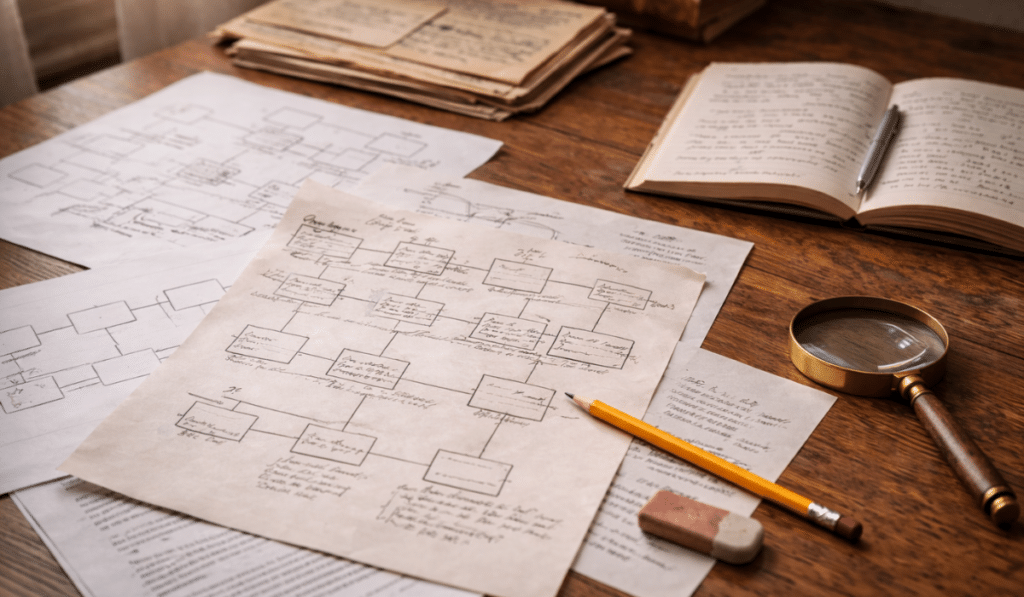
1. Build Visual Timelines
Use simple charts to compare two individuals side by side. Conflicts become obvious quickly.
2. Track Witnesses and Neighbors
People appearing repeatedly near your relative may confirm identity.
3. Map Locations
Plot addresses on a map to see movement patterns.
4. Analyze Naming Patterns
Families often rotate names across generations. Recognizing the pattern helps reduce confusion.
Real-Life Style Example
Imagine you find two records for “Robert Johnson”:
- Record A: Born 1952, married Linda, lived in Ohio
- Record B: Born 1976, married Rachel, lived in Texas
At first glance, they appear similar. But by comparing:
- Birth years
- Spouse names
- Locations
- Children listed
You quickly see they are two different individuals — possibly father and son.
This simple comparison prevents major errors in your family tree.
FAQ: Identifying Relatives with Similar Names
How do I identify relatives with similar names accurately?
Use multiple identifiers such as age, location, spouse, occupation, and family relationships instead of relying on names alone.
What causes genealogy name confusion?
Family naming traditions, cultural practices, and repeated names across generations are the most common causes.
How many sources should I check before confirming someone?
At least two or three reliable sources should agree before adding someone permanently to your tree.
Can people search websites be trusted?
They are great starting points but should always be verified with additional records.
What is the best way to avoid mistakes?
Create timelines, compare multiple data points, and document your reasoning for each match.
Conclusion
Learning how to identify relatives with similar names is one of the most important skills in family history research. Names alone rarely tell the full story — but when combined with dates, locations, relationships, and records, the picture becomes clear.
By following structured methods, using verification checklists, and avoiding common mistakes, you can reduce genealogy name confusion and build a more accurate family tree. Whether you’re a beginner or exploring deeper branches of your ancestry, careful analysis will always save time and prevent costly errors.
Remember: successful genealogy isn’t about finding information quickly — it’s about verifying it correctly.

I am Sandy Saga, the writer and content researcher behind FamilyTreeNow.net. I create clear, easy-to-understand informational content related to family history, people search resources, genealogy topics, and public information awareness. My goal is to help readers understand how online search tools and family research resources work in a simple and responsible way.
The content on FamilyTreeNow.net is published strictly for informational and educational purposes only. I focus on providing accurate, transparent, and reader-friendly information to help users explore and learn. This website does not offer official records, legal advice, or professional services — it exists solely as an independent informational resource.