
Losing contact with family members is more common than most people think. People move to different cities, change their names after marriage, migrate internationally, or simply drift apart due to time and life circumstances. In some cases, relatives may be separated because of adoption, family disagreements, or incomplete family records.
Thanks to modern technology, reconnecting with missing relatives has become easier than ever. Online records, genealogy tools, social platforms, and public databases now allow individuals to uncover family connections that once required years of investigation. However, many people don’t know where to begin — or which methods actually work.
This guide explains 7 proven methods to locate missing family members, using practical steps and safe research strategies. Whether you are trying to build your family tree, reconnect with someone from your past, or simply learn more about your roots, these methods can help you move in the right direction.
Why Finding Missing Family Members Can Be Challenging
Before diving into the methods, it’s important to understand why family searches can be difficult:
- Names change due to marriage or personal choice
- Families move frequently across cities or countries
- Older generations may not have a strong online presence
- Records can be outdated or incomplete
- Nicknames or spelling variations create confusion
The good news is that combining multiple approaches dramatically increases your chances of success.
Method 1: Start With What You Already Know
One of the biggest mistakes people make is searching without organizing existing information first. Even small details can become powerful clues.
Gather Basic Information
Write down everything you know about the person:
- Full name (including middle names)
- Nicknames
- Date of birth or approximate age
- Last known city or address
- School, workplace, or occupation
- Names of parents, siblings, or spouses
Collect Family Documents
Old records often contain hidden clues:
- Birth certificates
- Marriage records
- Old letters or postcards
- Photo albums
- Graduation documents
- Address books
Talk to Older Family Members
Grandparents, uncles, or distant relatives may remember details that were never written down, such as:
- Previous neighborhoods
- Maiden names
- Old phone numbers
- Historical family disputes or relocations
Tip: Create a simple timeline of events. This helps you track movement and major life changes.
Method 2: Build a Family Tree
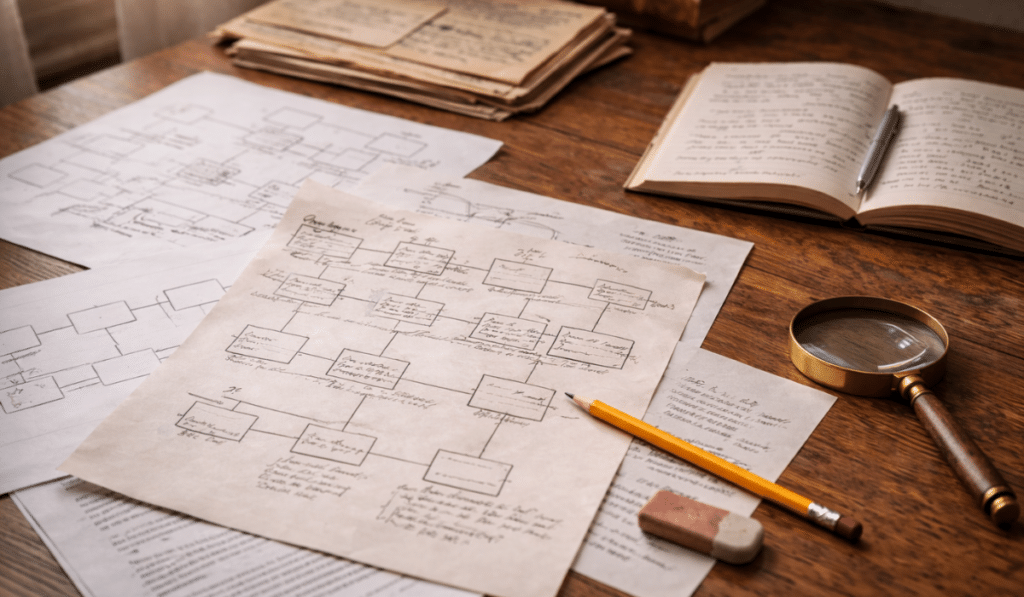
Creating a family tree is one of the most effective ways to identify missing links between relatives. Often, the person you are searching for becomes easier to locate once you understand their surrounding family connections.
Why Family Trees Work
Family trees allow you to:
- Visualize relationships
- Identify siblings or cousins you didn’t know about
- Find alternative search paths
- Discover shared addresses or surnames
How to Start
Begin with yourself and move backward:
- Your parents
- Grandparents
- Great-grandparents
- Extended relatives
As you add names, you may discover:
- New surnames
- Alternate spellings
- Migration patterns
Sometimes you won’t find the missing person directly — but you’ll find their relatives, which can lead you to them.
Pro Tip
Search for siblings or cousins instead of the target person. They often have stronger online footprints.
Method 3: Search Public Records
Public records are one of the most reliable sources for locating family members because they are based on official data.
Common Types of Public Records
- Address history
- Property ownership records
- Marriage and divorce records
- Birth and death records
- Census data
- Voter registrations
How Address History Helps
Address history is especially valuable because it:
- Shows where someone lived over time
- Reveals shared households
- Identifies related individuals at the same address
- Helps track relocation patterns
For example, if your relative lived at a certain address ten years ago, searching that address may uncover new names associated with the property.
Cross-Checking Is Important
Always verify information from multiple sources. Public records may contain outdated or incomplete details.
Method 4: Use Online People Search Platforms
People search tools have become one of the fastest ways to find someone today. These platforms collect publicly available data and organize it into searchable profiles.
What You Can Usually Find
Depending on the available data, you may discover:
- Current or past addresses
- Possible relatives
- Age range
- Associated phone numbers
- Location history
Smart Search Tips
- Use full names whenever possible
- Include state or city filters
- Try alternative spellings
- Search using maiden names
- Add middle initials if available
Verify Before Contacting
Not every result will be accurate, so compare information with your own records before reaching out.
Method 5: Use Social Media Strategically
Social media has become one of the most powerful tools for reconnecting families — but it works best when used strategically.
Platforms to Check
- Facebook — family groups and community pages
- LinkedIn — professional profiles
- Instagram — location-based searches
- X (Twitter) — public conversations and interests
Smart Search Techniques
- Search by full name + city
- Look for shared mutual connections
- Check tagged photos
- Search for family surnames together
- Explore alumni groups or local communities
Look Beyond the Person
Sometimes you won’t find the person directly, but you may find:
- A sibling
- A child
- A spouse
- A close friend
These connections can help confirm you’re on the right path.
Method 6: Explore Local and Community Resources
Not everything exists online. Local resources can fill important gaps.
Helpful Offline Sources
- Local newspapers and archives
- Community Facebook groups
- School alumni associations
- Church or religious directories
- Neighborhood organizations
Why This Works
People often maintain local connections even when they are difficult to find online.
Searching a small-town community group or local archive can reveal:
- Wedding announcements
- Graduation notices
- Obituaries mentioning family members
- Community event participation
These details often provide new names and locations to continue your search.
Method 7: Reach Out Carefully and Respectfully
Finding someone is only part of the journey — contacting them should be done thoughtfully.
Best Practices for First Contact
- Keep your message short and respectful
- Explain who you are clearly
- Mention the family connection
- Avoid sharing overly personal information immediately
- Give them space to respond
Example First Message
“Hi, my name is [Name]. I’m researching my family history and believe we may be related through [family connection]. If this sounds familiar, I’d love to connect when you’re comfortable.”
Respect Boundaries
Not everyone may be ready to reconnect. Some people may need time, while others may choose not to respond. Respecting privacy is essential.
Common Mistakes to Avoid
Many searches fail because of avoidable errors.
Searching With Limited Information
Even small details like a middle name or previous city can change results significantly.
Ignoring Name Variations
People may appear under:
- Nicknames
- Married names
- Alternate spellings
Relying on Only One Method
The best results come from combining multiple approaches.
Contacting Too Aggressively
Repeated messages or emotional introductions can make people uncomfortable.
Safety and Privacy Tips
While searching for family members, always prioritize safety.
- Verify identity before sharing private details
- Avoid sending money or sensitive documents
- Use secure communication channels
- Be cautious with unfamiliar links or requests
Remember, digital information can sometimes be inaccurate or outdated.
What to Expect During the Process
Finding missing family members rarely happens overnight. Some searches take weeks or even months.
You may experience:
- Dead ends
- Incomplete records
- Conflicting information
Stay patient. Every small piece of information builds toward a bigger picture.
Realistic Success Strategy
The most successful searches follow this pattern:
- Gather known information
- Build a family tree
- Search public and address records
- Use people search tools
- Check social media
- Explore local archives
- Reach out respectfully
Combining these methods significantly increases your chances of reconnecting.
Final Thoughts
Finding long lost family members is not just about data — it’s about reconnecting stories, rebuilding relationships, and understanding your personal history. With modern online tools, what once seemed impossible is now achievable for many people.
Start small, stay organized, and use multiple methods together. Even a small clue — an old address, a forgotten surname, or a shared relative — can lead to meaningful discoveries.
Whether you’re building your family tree or searching for someone you haven’t seen in years, patience and persistence often lead to the best outcomes.

I am Sandy Saga, the writer and content researcher behind FamilyTreeNow.net. I create clear, easy-to-understand informational content related to family history, people search resources, genealogy topics, and public information awareness. My goal is to help readers understand how online search tools and family research resources work in a simple and responsible way.
The content on FamilyTreeNow.net is published strictly for informational and educational purposes only. I focus on providing accurate, transparent, and reader-friendly information to help users explore and learn. This website does not offer official records, legal advice, or professional services — it exists solely as an independent informational resource.